Showing posts with label egypt. Show all posts

Saturday, March 14, 2026

A PETROGLYPHIC RECORD OF PHARAONIC CONQUEST IN THE SINAI:

 There is a lot of activity in the rock art world in Egypt. Reports of new discoveries are seemingly coming out more frequently then ever. A recent report by Mustafa Nour El-Din, and Ludwig D. Morenz (2025) ascribed a petroglyphs panel in the Sinai Peninsula to a period of Egyptian military expansion as a record of conquest.

The conquest panel, lines marked in on photograph.  Photograph by M. Nour El-Din, drawing by E. Kiesel.

Writing for Archaeology Magazine online Dario Radley set the scene as follows. “Mustafa Nour El Din of the Aswan Inspectorate at the Egyptian Ministry of Antiquities documented the carving during a field survey. Egyptologist Ludwig Morenz of the University of Bonn led the study of the images and inscriptions. The panel shows a large figure with raised arms facing a kneeling man struck by an arrow. The wounded figure’s posture signals defeat and submission. Nearby, a boat appears carved in outline. Early Egyptian art often used boats as symbols of royal power and state presence.” (Radley 2026) A section of the panel above the boat has been battered out to remove part of the image. This likely represents another example of the instances in Egyptian history where one Pharaoh attempted to have a predecessor erased from their history.

The conquest panel close-up, lines marked in on photograph.  Photograph by M. Nour El-Din, drawing by E. Kiesel.

El Din and Morenz (2025) interpret the panel as following. “Looking at the inscription we might understand the figure of the striding man as a representation of the god Min himself, but lacking specific iconographic indications. However, we should also consider the early date from a time of developing iconograpic conventions in depicting gods in the Nile Valley as well as the cultural periphery. We cannot properly decide, whether the striding man with raised arms depicts an Egyptian ruler (but no name or title is given) or the god Min (the inscription supports that understanding, but the iconography is different from what we might expect for Min: no crown, no phallus). If the striding man would have been depicted with the red crown he can be identified as Egyptian king, but that iconographic identification remains doubtful. Considering the inscription, it does not seem impossible to understand the main figure in the scene as an image of the god Min. Furthermore, looking at the entire composition, we can assume the boat to have been associated with the Egyptian ruler, the triumphant man with god Min and the subdued and killed man with the local inhabitants.” (El Din and Morenz 2025:87) Identification of the figure with the god Min is postulated because of a nearby text carved into the cliff which reads “(God) Min, ruler of copper ore / the mining region.” (El Din and Morenz 2025:87) Whether or not the large figure is the Pharaoh or the god Min the Pharaonic presence is definitely indicated by the presence of the Egyptian style boat.

The conquest panel drawing by E. Kiesel.

This panel is likened to a propaganda poster from the government. “Researchers see the composition as a message placed in a visible location along a travel corridor. The standing victor likely represents Egyptian authority under divine protection. The kneeling figure represents local inhabitants. The imagery forms a narrative of domination linked to resource control. Such visual claims supported economic expansion and reinforced ideological control over distant zones.” (Radley 2026) In this case, the nearby copper mines.

So, is this panel a historical record, or an illustration of a myth or legend. “When looking at scenes of violence, the fundamental question of historical reality versus ideological patterns and visual staging arises, and this seems a big question deserving future research. However, the historical significance of this 5,000-year-old rock picture depicting a scene of Pharaonic dominance lies in its value as evidence of Egyptian colonization of south-western Sinai during the Proto- and Early Dynastic periods. Why did Egyptian extensions of territorial claims beyond the Nile valley happen and why so early? To answer these questions, more detailed archaeological research in this area is needed. However, thanks to the surveys conducted by Mustafa Nour El-Din, we already know some metallurgical installations for copper processing (in this area), as well as copper slag, awaiting publication. It is likely that Wadi Khamila was already an important mining area for raw materials, especially copper ore and perhaps also turquoise, during the 4th/3rd millennium BC.” (El Din and Morenz 2025:90) As the military strength of the Egyptian empire was based upon copper the explanation of this panel as marking a site of early Egyptian expansion and conquest for mineral wealth seems to make the most sense. The presence of copper ore and processing, as well as possibly turquoise, would make this an important acquisition.

NOTE: Some images in this column were retrieved from the internet with a search for public domain photographs. If any of these images are not intended to be public domain, I apologize, and will happily provide the picture credits if the owner will contact me with them. For further information on these reports you should read the original reports at the sites listed below.


REFERENCES:

El-Din, Mustafa Nour and Ludwig D. Morenz, 2025, Wadi Khamila, the god Min and the beginning of Pharonic Dominance in Sinai 5000 years ago, freunde-abrahams.de. Accessed 30 January 2026.

Radley, Dario, 2026, 5,000 year old rock art in Sinai shows early Egyptian conquest and control of copper mines, 30 January 2026, Archaeology magazine online, https://archaeologymag.com. Accessed online 30 January 2026.


Saturday, July 12, 2025

COULD THE CAVE ARTISTS ACTUALLY SEE THEIR COLORS? – PART 1:

Color wheel. Internet image, public domain.

What follows is my take on a philosophical question – “did ancient people see colors the same way we do?” This one is just for fun, please don’t take it too seriously – I do not.


I have recently run across a very strange line of inquiry (or speculation anyway) that investigates whether or not ancient people could see/discriminate/comprehend all of the colors that we see. This became a fascinating mental exercise for me. Such a question would perhaps be pertinent to us as to whether or not the Paleolithic cave-artists saw the same colors we see, and did that reflect in their paintings? Before beginning I have to confess that in extensive searches of cave paintings in Europe, both on the internet and in printed books, I have failed to find an example painted in blue.


Cave painting of auroch, Lascaux, France. Internet image, public domain.

One strong possibility is that while they certainly saw the colors, meaning that their eyes picked up on all the same wavelengths of light that we do, they may not have comprehended what they were seeing. Based upon the old truism that you cannot actually comprehend something that you do not have a name for, until the name for the color blue was invented (in whatever language they spoke) they just were not as aware of it as they would have been shades of red. Remember, there seems to have been a historic fascination with red ocher.


Cave painting of auroch and horses, Lascaux, France. Internet image, public domain.

One of the first examples scholars noticed was in the writings of the Greek poet Homer. Christopher Hall (2018) has studied this subject extensively and explains that “Then Achilles, in tears, moved far away from his companions, and sat down on the shore, and gazed out over the wine-dark sea. (Iliad, 1. 351-353, trans. Stephen Mitchell) What color is the sea? Perhaps a silver-pewter at dawn, or a deep blue, or a warm green-blue, depending on the particular day, depth, and geographic location —but have you ever described the sea as being the color of claret? One of the characteristics of Homer’s writing is his use of epithets:  rosy-fingered dawn, swift-footed Achilles. Arguably the most famous of these is his oinops pontos, his wine-dark sea; it appears over a dozen times in the Iliad and the Odyssey, companion books chronicling the Greek siege of Troy, the Trojan War, and then the difficult journey undertaken by Odysseus after the war as he attempts to find his way home back to Ithaca. Wine-dark sea has been the subject of much speculation over the past couple hundred years. Shouldn’t the sea be blue? Strangely, nowhere in Homer’s epic poetry is the color blue ever mentioned. Water, water everywhere, but not a hint of blue.” (Hall 2018) I love the humor in Hall’s use of Coleridge’s “Rime of the Ancient Mariner” (way back when I read this in High School English it was spelled “Rhyme of the Ancient Mariner). He is pointing out the omission of any reference to the color blue, and some of Homer’s substitute phrases for it.


To begin with I need to add another disclaimer – an online search for “ancient Greek blue pigments” will yield many sites that do claim that the ancient Greeks had a word for blue. But again I have to confess that in extensive searches of images of Greek art, both on the internet and in printed books, I have failed to find an example painted in blue.

Hall continues “One of the first people to seriously study Homer’s use of color was the 19th-century classics scholar and British Prime Minister William Gladstone. In 1858, Gladstone published a seminal 1,700-page study of Homer’s epic poetry, which included a 30-page statistical analysis of Homer’s use of color. Gladstone notes that, compared to modern writers, Homer rarely mentions color, and what is mentioned is mostly limited to shades of black and white, with red, yellow, and green making only occasional appearances. Black is mentioned almost 200 times, white about 100. Red is mentioned fewer than 15 times, and yellow and green fewer than 10. Moreover, Homer’s descriptions of color can be, at times, completely bizarre: skies the color of bronze, stars are an iron or copper hue, sheep wool and ox skin appear purple, horses and lions are red, and honey glows green. Most conspicuous, however, Gladstone noted the complete absence of the color blue. Nothing is ever described as ‘blue.” (Hall 2018) Might it just have been that Homer was color blind? This turned out to be Gladstone’s explanation.

Wall painted Egyptian blue, Tomb of Meruka, Egypt. Internet image, public domain.

But then the question is was it just Homer who was color blind or were all ancient Greeks color blind? “But Homer’s blindness could not be an explanation for the strange use of color in the Iliad and Odyssey. The existing texts record stories from a longstanding oral tradition. Moreover, once Gladstone sifted through Homer’s texts, he also analyzed the descriptions in other ancient Greek texts and found they too had a conspicuous lack of color terms, limited to mostly shades of black and white—and again, a total absence of the color “blue.” The word didn’t even exist. Did the Homeric Greeks have defective color vision? Was there something physically different about their eyes? Indeed, that was Gladstone’s conclusion: “[The] organ of colour and its impressions were but partially developed among the Greeks of the heroic age.” The ancient Greeks, according to him, were color blind.” (Hall 2018) In other words, it was not just Homer, it apparently was his whole culture.

Egyptian blue pyxis (cylindrical container). Internet image, public domain.

Since then, many other theories have been posited for the lack of the word blue in Homer’s writings. “All of these potential explanations fail to account for one very important thing, however: the absence of the word “blue” in ancient Greek literature. The Greek islands are practically surrounded by the color blue: blue sky, blue sea—and yet the word for “blue” is conspicuously absent. Gladstone was on to something with his statistical compilation of color use in ancient Greek literature, but as it turns out, his study was a bit narrow: the ancient Greeks were not alone in their limited color descriptions, nor in the conspicuous absence of the color “blue.” Expanding upon Gladstone’s research, philosopher and philologist Lazarus Geiger found the same phenomenon in ancient Hebrew literature, Assyrian texts, Icelandic sagas, the Koran, ancient Chinese stories, Hindu Vedic hymns and Indian epics such as the Mahabharata. It is as though the entire ancient world were living in murky world of black and white, basking under heavy, brazen bronze skies, interrupted on rare occasion by flashes of red or yellow. The only ancient culture to have a word for blue was the Egyptians, as they developed the first synthetic pigment, Egyptian blue (the secret of its manufacture was lost in Roman times, but is thought to have been derived from heating together a quartz sand, a copper compound, calcium carbonate, and a small amount of alkali).” (Hall 2018) This resulted in a coarse blue sandy, partially vitrified product (somewhat similar to faience blue glaze) that was then ground fine enough to be used as the pigment. Egyptian blue was possibly the first artificially produced pigment.

Egyptian blue, Nebamun hunting. wall painting from the tomb-chapel of Nebamun, Thebes, New Kingdom, 1350 BC. Image credit Werner Forman Archive  Bridgeman Images.

“In the annals of history, ancient Egyptian society emerges as the trailblazer in embracing a distinct term for the color blue, owing to its pioneering development of blue dyes. This innovation found its vibrant expression in the renowned hue known as Egyptian blue. This stunning color featured in artworks such as the tombs of Mereruka  from the Old Kingdom (2600 to 2100 BC).” (Cowie 2024)


Then the question became whether the lack of blue was actually based on a physical difference, or was perhaps a cultural or linguistic question.


NOTE 1: The second part of this column will be posted next week.

NOTE 2: Some images in this posting were retrieved from the internet with a search for public domain photographs. If any of these images are not intended to be public domain, I apologize, and will happily provide the picture credits if the owner will contact me with them. For further information on these reports you should read the original reports at the sites listed below.


REFERENCES:


Cowie, Ashley, 2024, Hidden Hue: Why Ancient Civilizations Failed to See the Color Blue? 18 June 2024, Ancient Origins, https://www.ancientorginsunleashed.com. Accessed online 19 February 2025.


Hall, Christopher, 2018, Blue is the Rarest Color: Language and Visual Perception, 30 August 2018, Burnaway digital magazine online, https://burnaway.org/magazine/blue-language-visual-perception. Accessed online 19 February 2025.

Sunday, January 12, 2025

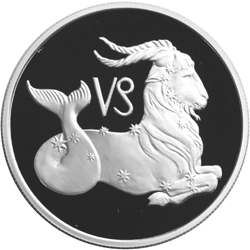
EGYPTIAN PETROGLYPH IDENTIFIED AS A CONSTELLATION – THE EL-HOSH CAPRICORN (GOAT-FISH):

The el-Hosh Capricorn petroglyph, Egypt. Image from msn.com.

A recent paper (2024) by Linda Evans and her team discuss a petroglyph with a combination of the apparent fore-quarters of a quadruped and the rear half being a fish tail, discovered at a rock art site in Upper Egypt. Their analysis led to conclusions that it represented the goat-fish symbol for the constellation Capricornus.

Close-up of the el-Hosh Capricorn petroglyph, Egypt. Image from phys.org.

“A new study by Dr. Linda Evans and her colleagues from Macquarie University, Australia, published in the Journal of Egyptian Archaeology, has recently identified what may be an Egyptian petroglyph depicting the zodiac sign Capricornus, a hybrid creature with the forequarters of a goat and the body of a fish. Zodiac symbols are completely unattested in Egyptian rock art, making this image the only known example. By studying the history of the zodiac sign, its introduction into Egypt, and its use, the researchers were able to determine the likely period of and possible reason for its creation.” (Oster 2024)

Enhanced image of the el-Hosh Capricorn petroglyph, Egypt. Image from phys.org.

Drawing of the petroglyph. Image from Evans et al., 2024.

At some point in prehistory hominins came up with a number of ideas concerning the night sky. One was that the stars made patterns that they believed that they could identify with beings, creatures, or implements. With this belief established it is not a long way to the assumption that these stellar creatures or beings influence life here on earth. “The ‘goat-fish’, a mythical creature incorporating the horned forequarters of a goat and the torso of a large fish, has long been known from the ancient Near East and Mediterranean regions. It first appeared in Mesopotamia, where it later represented the zodiac sign of Capricornus. There is also sporadic evidence of the sign in Egypt, beginning in the Graeco-Roman Period. Here we present an unusual petroglyph at the rock art site of el-Hosh in Upper Egypt (70 km north of Aswan, on the west bank of the Nile), which depicts a hybrid mammal and fish figure that we propose may also represent Capricornus.” (Evans et al. 2024) And, once we have accepted the proposition that what happens in the heavens influences life here on earth, then it is only natural to look for patterns or movements to try to analyze what they portend, and to develop rites and rituals to try to influence these portents.

The Sumerian god Enki. Illustration from mythology.net

Sandee Oster (2024) described the development of Capricornus as a symbol for a constellation. “The first occurrence of something resembling Capricornus occurred in Mesopotamia, where the Sumerian got Enki and the Akkadian equivalent Ea were usually depicted as bearded men with horned caps, wearing gowns. At the shoulders of these gowns, water streams filled with fish would spout. This later evolved into the first recognizable depiction of a goat-fish hybrid at the feet of the god on cylinder seals dating to ca. 2112-2004 BCE.” (Oster 2024) This cylinder seal was not illustrated.

Babylonian Capricorn on a boundary stone. (redrawn from Hinke 1907 fig. 36) Evans et al., 2024.

Greek Capricorn (sea goat). Illustration from Wikipedia.

According to Oster, the Greeks got the idea of the zodiac from the early Mesopotamian civilizations. “From Mesopotamia, the zodiacs and their associations eventually spread to Greece (5th century BCE) and from there to Rome (1st and 2nd century CE). By at least 300 BCE, zodiacs were known to Egypt and their earliest depictions could be found on zodiac ceilings in Egyptian Ptolemaic temples such as the temple Montu and Rattawy at Armant (c. 44-30 BCE). Later these zodiac symbols, including Capricornus, occurred in Roman-era temple ceilings, coffin lids, tombs, and even coins.” (Oster 2024)

Interestingly, I can find no mention of a capricornus or goat-fish hybrid therianthrope  anywhere online as being part of the Egyptian zodiac. Capricorn is one of the constellations in the Greek zodiac suggesting the possibility that this would have been introduced into Egypt by the Greeks or Romans

Later Egyptian (Greek period) Capricorn from the hypostyle hall, temple of Hathor, Dendera (traced from photograph), Evans et al. 2024.

Later Egyptian (Greek period) Capricorn from the Osiris chapel, temple of Hathor, Dendera (traced from photograph), Evans et al., 2024.

Linda Evans et al. (2024) came to the same conclusions when discussing the potential date of the petroglyph in question. “If a connection with Capricornus is accepted, a Graeco-Roman date for the petroglyph’s production may be possible. Furthermore, the creature’s outstretched tail possibly indicates a period earlier than the second century CE, when the Roman loop-tailed version of Capricornus became popular. It should be noted, however, that it has been proposed that Egyptian knowledge of the zodiac could have come directly from Mesopotamia, rather than via Hellenistic Greece.” (Evans et al. 2024)

Evans et al. discuss whether the possible origin of the symbol could be Mesopotamian or Graeco-Roman and note that if it was Mesopotamian the goat-fish could predate the Graeco-Roman Period. Their conclusion, however, is that it is more likely to have been created between the first century BCE and the end of the first century CE. One major clue that led them to this conclusion is the presence of Greek script carved on a nearby petroglyph panel.

NOTE: Some images in this posting were retrieved from the internet with a search for public domain photographs. If any of these images are not intended to be public domain, I apologize, and will happily provide the picture credits if the owner will contact me with them. For further information on these reports you should read the original reports at the sites listed below.

REFERENCES:

Evans, Linda, Fred Hardtke, and Wouter Claes, 2024, The Goat-Fish of El-Hosh: An Unusual Petroglyph Identified, The Journal of Egyptian Archaeology Online. Accessed online 20 November 2024.

Oster, Sandee, 2024, First ever goat-fish petroglyph reveals Egyptian  understanding of zodiac symbols, 19 November 2024, Phys.org. Accessed online 20 November 2024.

Saturday, December 14, 2024

A NEW ROCK ART DISCOVERY IN THE NORTHERN SINAI – AND ANOTHER DONKEY:

Petroglyph cave at Wadi al-Zulma, North Sinai, Egypt. Image provided by Egyptian Ministry of Antiquities.

A recent discovery in the northern Sinai Peninsula of Egypt contains rock art of a style unknown throughout the rest of the Sinai. “An archaeological mission from the Tourism and Antiquities Ministry discovered an ancient cave featuring a unique and diverse collection of carvings at Wadi al-Zulma, North Sinai, the ministry announced on Saturday. The head of ministry’s Egyptian Antiquities Sector, Ayman Ashmawy, explained that the archaeological cave is located at the beginning of one of Wadi al-Zulma’s tributaries within a mountainous area of limestone that is difficult to reach – about 90 kilometers southeast of the city of al-Qantara Sharq, and 60 kilometers east of the Suez Canal.” (Al-Youm 2020) Although the team members are calling this a discovery, once again I have to point out that its location and rock art had been known by many other people.

Donkey petroglyph,
Wadi al-Zulma, North Sinai, Egypt. Image provided by Egyptian Ministry of Antiquities.
Donkey. Internet image, public domain.

This donkey image, at Wadi al Zulma in the northern Sinai desert of Egypt, is located roughly 450 miles from the donkey at Karahan Tepe in Turkey that I wrote about previously, and it is undated as of yet. This suggests that we need to be very careful about any implications of cultural similarities, although these themes are very similar.

“The age of the cave drawings is still unknown, but Aymen Ashmawi, head of the ancient Egyptian antiquities sector at the Ministry of Antiquities explained the scenes carved inside the cave are completely different from those found in South Sinai, having a special artistic style that resembles raised relief in execution.” (Bartek 2020)

Petroglyph at Wadi al-Zulma, North Sinai, Egypt. Image provided by Egyptian Ministry of Antiquities. This appears to be an older image of a quadruped, with a newer ostrich carved over it appropriating the front leg.

Superimposed petroglyphs at Wadi al-Zulma, North Sinai, Egypt. Image provided by Egyptian Ministry of Antiquities.

I will go farther than Ashmawi’s statement that they “resemble raised relief in execution.” I would classify many of these petroglyphs as low reliefs. The lines are fairly deeply carved, and then the inner edge of the line is rounded off to provide a more natural looking portrayal.

Ibex petroglyph at Wadi al-Zulma, North Sinai, Egypt. Image provided by Egyptian Ministry of Antiquities.

“The Director General of the North Sinai Antiquities and head of the archaeological mission working on the cave Hisham Hussein explained that most of the carvings are within the cave’s inner walls and depict animals such as donkeys, camels, deer, mule and mountain goats.” (Al-Youm 2020) The relatively deep carving, unlike simple scratching, suggests that the artists were there for relatively long periods of time. This allowed them to take more care in accuracy and appearance.

Quadruped petroglyph at Wadi al-Zulma, North Sinai, Egypt. Image provided by Egyptian Ministry of Antiquities.

“According to a Tourism and Antiquities Ministry statement, the cave is 15 meters deep and 20 meters high. The ceiling is made of limestone, and the cave is filled with large amounts of animal waste. Ashes found inside the cave indicate it’s continuous usage by locals as shelter, where they might have stayed with their flocks during rain or winter.” (Al-Youm 2020) Given ashes indicating continuous usage for shelter there must also be fragments of charcoal that may be radiocarbon dated, although the animal waste suggests that the stratigraphy of much of the deposit has probably been stirred up by the hoofs of livestock. Perhaps careful excavation next to a wall would yield better stratification of deposits.

Given that the team stated that the cave had been used by locals with their flocks, they certainly cannot claim credit as the first discoverers of the rock art.

NOTE: Some images in this posting were retrieved from the internet with a search for public domain photographs. If any of these images are not intended to be public domain, I apologize, and will happily provide the picture credits if the owner will contact me with them. For further information on these reports you should read the original reports at the sites listed below.

REFERENCES:

Al-Masry Al-Youm, 2020, Photos: Archaeologists uncover ancient cave in North Sinai, 26 April 2020, Egypt Independent, https:www.egyptindependent.com. Accessed online 27 November 2024.

Bartek, Jan, 2020, Remarkable Ancient Animal Engravings Discovered In Unknown Cave In Sinai, 1 May 2020, https://www.ancientpages.com. Accessed online 27 November 2024.


Saturday, March 25, 2023

ACTIVITIES PORTRAYED IN ROCK ART – SWIMMING:

Wadi Sura, Egypt. Internet photograph, public domain.

I ran across a photograph of the Cave of Swimmers in Egypt and thought it would be fun to do a column on the subject of swimming illustrated in rock art but the subject quickly grew on me.“The Cave of Swimmers is a cave with ancient rock art in the mountainous Gilf Kebir plateau of the Libyan Desert Section of the Sahara. It is located in the New Valley Governorate of southwest Egypt, near the border with Libya. The cave and rock art was discovered in October 1933 by the Hungarian explorer Laszlo Almasy. It contains Neolithic pictographs (rock painting images) and is named due to the depictions of people with their limbs bent as if they were swimming. The drawings include those of giraffe and hippopotamus. They are estimated to have been created as early as 10,000 years ago with the beginning of the African Humid Period, when the Sahara was significantly greener and wetter than it is today.” (Wikipedia)

Now, as to how this subject grew on me, I quickly remembered portrayals in Paleolithic art of reindeer swimming so that had to be added. But first “The earliest humans swam. Neanderthals living in Italy about 100,000 years ago swam confidently. Their ear bones show they suffered from swimmer’s ear from diving 3 – 4 meters to retrieve clamshells they then shaped into tools.” (Messer 2022) And, although there are now cave paintings that are attributed to Neandertals none that I am aware of show anything related to swimming.

Swimming reindeer, Olenyok River, Siberia. Internet photograph, public domain.

Next, there are a few portrayals of reindeer that may show them as swimming. Reindeer are excellent swimmers and the Paleolithic hunters who relied on them would certainly have known this. Additionally, when they were in the water they would have been more vulnerable to the hunters.

Reindeer, mammoth ivory, 13,000 BCE. Internet photograph, public domain.

From Abri Montastruc, in southwest France, comes this 13,000-year-old carving on mammoth ivory of two reindeer that have been interpreted as swimming. I am not too sure about this one, the positions of the legs may depend more on the dimensions of the material than an attempt to portray swimming, but for the record this is what it is called.

Carved reindeer antler, Grotte de Lortet in the Haute Pyrenees, France. Internet photograph, public domain.

Rollout of carved reindeer antler, Grotte de Lortet in the Haute Pyrenees, France. Internet photograph, public domain.

Then, from the Grotte de Lortet in the Haute Pyrenees, France, comes this Magdalenian (17,000 to 12,000 BCE) Period carved reindeer antler. The remaining images engraved on it comprise a group of reindeer with salmon around and between their legs. This one is often described as reindeer swimming with the salmon under the water among their legs.

Swimming reindeer, Lascaux Cave, France. Internet photograph, public domain.

And my last example of swimming reindeer comes from 17,500 years ago in Lascaux Cave, France. Drawn on the cave wall is a row of five reindeer shown mostly as just neck and head with a line of the upper back on the last one. None of them show lower body and legs. Additionally, three of them have their heads tilted up exactly as if they were swimming across a river. One problem with the identification of these five reindeer as swimmers is the possibility that the missing bodies are due to erosion of the cave wall instead of purposeful omission, but, since I cannot prove that I will go along with swimming reindeer for now.

Cave of the Swimmers, Egypt. Internet photograph, public domain.

Then we come to the Cave of the Swimmers. “Rock paintings depicting swimmers appear about 9000 BCE on cliff walls at Tassili n’Ajjer, in southern Algeria, far out in the Sahara desert. – Painted images on the rock walls at Tassili n’ Ajjer show people hunting, sitting and dancing. A few figures are painted parallel to the ground with their arms outstretched. These painted figures may be swimming. - - About a thousand years after that, and a little further east, somebody painted more such figures on another wall, in the Cave of the Swimmers at Wadi Sura in western Egypt. By 8000 BCE the people living near this cave were settling down in villages. They farmed wheat and barley, or herded cattle and sheep. In their paintings, little red figures float more or less horizontally on the creamy background of the rock, holding out their arms in front of them. It seems pretty clear that the figures are doing the breaststroke, or a dog-paddle. Their legs are folded as if they were doing a frog kick, and they raise their heads to keep them out of the water. Although it is possible that these figures represent spirits floating in the air, or people sleeping on the ground, swimming is the most plausible explanation.” (Carr 2022:19)

Cave of the Swimmers, Egypt. Photograph, the Bradshaw Foundation.

The Cave of the Swimmers “is so named due to the human figures painted on its walls with their limbs contorted as if swimming. It has since become world-renowned, particularly as a key location in the feature film The English Patient (1996), based on Michael Ondaatje’s novel of the same name. The book and film feature fictionalized versions of the cave and its real-life discoverer, Laszlo Almasy, as the title character. These paintings have been dated at between 9,000 and 6,000 years ago, although some researchers have suggested both earlier and later dates.” (British Museum)

Cave of the Swimmers, Egypt. Swimmer in lower left of the panel. Internet photograph, public domain.

Cave of the Swimmers, Egypt. Swimmers in upper right of the panel. Internet photograph, public domain.

“In 1932 Almasy and (Patrick A.) Clayton, together with a similarly-named young Englishman, Sir Robert Clayton East Clayton, organized a major expedition to survey the unknown western side of the Gilf Kebir, and for the first time the surveying equipment included an aeroplane – a Gypsy Moth belonging to Robert Clayton. The gypsy Moth revealed three hidden valleys with vegetation in the northern Gilf Kebir. All previous attempts to reach them over land had failed, but in 1933 Almasy and Clayton, on separate expeditions, succeeded in entering them – Clayton the two to the east, Wadi Hamra and Wadi Abd el Melik, and Almasy to the west, Wadi Talh. On the same 1933 expedition Almasy went on to reach Regenfeld and the rock paintings of Ain Doua at Uweinat. Later that year, on a separate expedition, he discovered the painted caves at Wadi Sora – he had found the swimmers.” (Bradshaw Foundation)

Klassies River mouth, South Africa. Illustration no. 7 from Carr, p. 27.

Dating to considerably later is this decorated pebble from the mouth of the Klassies River in South Africa. Showing a human figure swimming above a group of four dolphins, this was dated at 400 - 300 BCE by dating a pile of seashells it was found with.  (Carr 2022:27) 

Drawing of the panel, Rain Snake shelter, Lesotho.

Drawing of the panel, Rain Snake shelter, Lesotho. Close up showing the swimming figure under the Rain Snake.

A San painted panel in a rock shelter on the Senqu River, Sehonghong, Lesotho shows, among many anthropomorphs interacting with a 'rain snake', a figure immediately under the middle of the snake who seems to be swimming in a deluge of rain from the snake. This had been interpreted as a 'rain snake' by Qing, the only San person ever asked by Europeans to interpret a San painted scene while actually at the site. Qing told his questioners that the figures were all "under water". (Challis et al. 2013: 5)

Cheyenne children swimming, 1904, Wyoming. Illustration no. 97 from Carr, p. 322.

And finally, a drawing from 1904 in Wyoming showing a group of Cheyenne children swimming, including one doing a somersault dive off of the river bank. (Carr 2022:321)

I had originally expected that this would be the end of this thread but, while doing background research online, I ran across material that cried out to be a separate column – purported pictographs painted of mermaids in South Africa. This will be covered soon in another episode.

NOTE: Some images in this posting were retrieved from the internet with a search for public domain photographs. If any of these images are not intended to be public domain, I apologize, and will happily provide the picture credits if the owner will contact me with them. For further information on these reports you should read the original reports at the sites listed below.

REFERENCES:

Bradshaw Foundation, Exploring the Rock Art of Gilf Kebir, The Cave of Swimmers, Bradshaw Foundation, https://www.bradshawfoundation.com/africa/gilf_kebir_cave_of_swimmers/index.php. Accessed online 13 January 2023.

British Museum, Cave of Swimmers, Egypt, https://africanrockart.britishmuseum.org/country/egypt/cave-of-swimmers. Accessed online 14 January 2023.

Carr, Eva, 2022, Shifting Currents, A World History of Swimming, Reaktion Books, London.

Challis, Sam, Jeremy C. Hollmann and Mark McGranaghan, 2013, Rain snakes from the Senqu Rover: New light on Qing's commentary on San rock art from Sehonghong, Lesotho, Azania, Archaeological Research in Africa, 24 July 2013, DOI: 10.1080/0067270X.2013.797135. Accessed online on 18 March 2023.

Messer, Jane, 2022, The earliest humans swam 100,000 years ago, but swimming remains a privileged pastime, 26 December 2022, online at https://theconversation.com. Accessed online on 13 January 2023.

Wikipedia, Cave of Swimmers, https://en.wikipedia.org/wiki/Cave_of_Swimmers. Accessed on 15 January 2023.

Saturday, November 21, 2020

NEOLITHIC PETROGLYPHS AT QUBBET-EL-HAWA, EGYPT:


Qubbet El-Hawa, Egypt. Photo David Sebel.

A recently discovered petroglyphs at Qubbet El-Hawa (Cave of the Winds) along the Nile river in Egypt is estimated to be 6,000 years old. "The image, discovered recently by archaeologists, provides a tantalizing glimpse of Egypt's Neolithic period, or Stone Age. It likely dates back to the latter half of the fourth millenium B.C., said Ludwig Morenz, and Egyptologist at the University of Bonn in Germany." (Pappas) This date would mean that the images at Qubbet El-Hawa predate the pharaohs and provide a glimpse into very early life along the Nile river.


     Qubbet El-Hawa, Egypt. Photo David             Sebel - photo enhanced.

"Qubbet el-Hawa is a site on the western bank of the Nile, opposite Aswan. The name is derived from the dome of the tomb of an Islamic sheikh, but archaeologically, it is usually understood as referring to the site of the tombs of officials lined up on artificial terraces below the summit of the Nile bank upon which the Islamic tomb stands." (Wikipedia)


Panel with conceptual drawing of what they think they see. David Sabel.

"The scene is interpreted by Morenz as a hunter with a bow standing next to an ostrich. On the other side of the ostrich is a person who seems to be wearing an ostrich mask. Morenz believes that the person might be a shaman and the mask-wearing might indicate ritual purposes." (Pappas)

Actual tracing of the panel. David Sabel.

"The images were pecked into the rock with a hard point and are now barely perceivable due to their considerable age. Only the archaeologically precise recording of the traces and the drawing of outlines revealed the images with noteworthy iconography. The initially confusing-looking arrangement of dots allows three figures to be seen upon closer inspection: a hunter with bow, and dancing man with raised arms, and between them, an African ostrich. 'The archer clearly shows hunting for the large flightless bird, while the man with raised arms can be identified as a hunt dancer,' reports Prof. Morenz. The dancer apparently wears a bird mask. The scene is reminiscent of the conceptual world of hunting, masks, and shamanism, as known from many parts of the Earth - including ostrich hunting by what are known as San (bushmen)." (University of Bonn 2017)

While I agree that they have found petroglyphs, to identify these figures in such detail does not seem to me to be warranted. Looking at the photographs and the field drawings the best I can say is that there seem to be three figures. Yes, one of them appears to have a bow, and the one in the center might be an ostrich, but that is pushing the limit of reasonable interpretation. I see nothing to suggest dancing and there is no indication of mask wearing. I fear that we have another case of Pareidolia, perhaps perhaps combined with an example of the Availability Heuristic.

“The availability heuristic involves making decisions based upon how easy it is to bring something to mind. When you are trying to make a decision, you might quickly remember a number of relevant examples. Since these are more readily available in your memory, you will likely judge these outcomes as being more common or frequently-occurring.” (Cherry 2020)  While I cannot know this for certain I suspect that Professor Morenz has, at some point, studied examples of San rock art which not only include ostriches, but are sometimes interpreted as showing ecstatic dancing, so this is what he saw. Pareidolia is the tendency of the human mind to interpret something as a familiar object - the old pony in the clouds, for example - and Morenz was looking for the meaning of the pecking on this panel. Not that I can say that his interpretation could not be possible, just that I don’t think he has enough data to make such definitive statements.

So, while I congratulate the team on a discovery that is significant, and important to Egyptian prehistory, I must say that I cannot agree with their interpretation based upon the evidence available.

NOTE: Some images in this posting were retrieved from the internet with a search for public domain photographs. If any of these images are not intended to be public domain, I apologize, and will happily provide the picture credits if the owner will contact me with them. For further information on these reports you should read the original reports at the sites listed below.

REFERENCES:

Cherry, Kendra, 2020 Heuristics and Cognitive Biases, https://www.verywellmind.com/what-is-a-heuristic-2795235

Pappas, Stephanie, 2017 Ancient Rock Carvings Depicting Masked People Discovered in Egypt, March 24, 2017, Live Science, http://www.livescience.com/58394-ancient-egyptian-rock-carvings-discovered.html?utm_source=ls-newsletter&utm_medium=email&utm_campaign=20170324-ls

University of Bonn, 2017 Egyptian Ritual Images from the Neolithic Period, March 22, 2017, https://phys.org/news/2017-03-egyptian-ritual-images-neolithic-period.html

https://en.wikipedia.org/wiki/Qubbet_el-Hawa