
Mural 30, Cliff Palace, Mesa Verde,
Colorado. Public domain photograph,
National Park Service.
On November
26, 2016, I posted a column titled Huerfano
Butte, New Mexico, as the Model for Painted Mountains at Mesa Verde?. In this
I posited that the theme of three mountains painted in a kiva at Eagle's Nest
ruin on the Ute Mountain Ute Reservation, as well as the three mountain
painting at Spruce Tree House were inspired by the small triple peaks of
Huerfano Butte.
Munson
describes these paintings (below) as landscape representations, although just a
general "landscape", not the particular identifiable feature which I
am suggesting, and Munson also recognized these triangles as "mountain
shapes": "Pueblo III murals
(1000-1325) from across Chaco and San Juan/Mesa Verde regions typically consist
of a bicolor banded pattern or of "blended" designs (figure 4.3)
combining bands with geometric designs derived from textiles and pottery
(Ortman 2008). Several authors have argued that the banded designs represent
landscapes, with a dark (usually red) lower register marking the horizon and a
white upper register as the sky (Brody 1991:57-68; Cole 2006; Newsome and
Hays-Gilpin in press). These landscapes are sometimes modified with triangular
"mountain" shapes that jut up from the red band into the upper register,
triangular "cracks" into the lower and, or lines of dots. The
repetition in these patterns suggest that time was important in Pueblo III
murals, with the various dots, triangles, and other marks possibly relating to
astronomical observations (Malville and
Putnam 1993) or to leaders' responsibilities for scheduling rituals based on
observations of the sun and sky. Newsome and Hays-Gilpin (in press) argued that
the position of the observer was critical to the meaning of Pueblo III murals,
for the configuration of the rooms in which they are found would have situated
the viewer within the landscape and calendrical cycles defined by the paintings. They also suggested
that the murals might be an early reflection of the process of linking
Ancestral Pueblo people to space in a meaningful way by establishing the Center
Place." (Munson 2011:85-87)

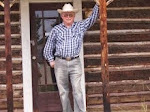
Cliff Palace, Mesa Verde, Colorado.
Photograph Peter Faris, May 1988.
Another
example of this thee mountain theme at Mesa Verde is Mural 30, seen at Cliff
Palace, in Mesa Verde. "Mural 30, on the third floor of a rectangular tower
(more accurately a room block) at Cliff Palace, is painted red against a white
wall. The mural includes geometric shapes that are thought to portray the
landscape. This mural is similar to murals inside other cliff dwellings,
including Spruce Tree House and Balcony House. Scholars have suggested that the
red band at the bottom symbolizes the earth while the lighter portion of the
wall symbolizes the sky. The top of the red band, then, forms a horizon line
that separates the two. We recognize what look like triangular peaks, perhaps mountains
on the horizon line. The rectangular element in the sky might relate to clouds,
rain, or the sun and moon. The dotted lines might represent cracks in the
earth." (Wikimedia Commons)
This many
examples of this theme certainly suggest that it had importance to the Pueblo
III people of Mesa Verde. It was used a number of times in different locations
so it must have resonated to many of the inhabitants of the region. Was it
actually a representation of the three peaks on Huerfano Butte, New Mexico? Any
attempt to answer that would require a full survey of the fire beacon
communication system linking Mesa Verde and the Chimney Rocks community to
reveal its full extent, but it is an interesting possibility.
REFERENCE:
Munson,
Marit K.
2011 The
Archaeology of Art in the American Southwest, Altamira Press, New York.
https://commons.wikimedia.org/wiki/File:Mural_30,_Cliff_Palace,_Mesa_Verde.JPG
www.nps.org
www.nps.org



 Posts
Posts

