Showing posts with label Blackfoot. Show all posts

Saturday, August 14, 2021

STORY TELLING - BIOGRAPHIC NARRATIVES IN ROCK ART:

It is quite common in looking at rock art to have the feeling that the images are telling a story, and that you can almost understand it, almost being the key word here. Although many rock art researchers deny that we can interpret the imagery we find, I disagree - at least in some cases. Some rock art is obviously telling a story and we are meant to be able to decipher it.


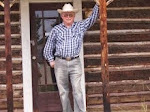
Bird Rattle (Blackfeet) carving his petroglyph,1924, Writing-on-Stone, Alberta, Canada. From James Keyser, 2004, Art of the Warriors, University of Utah Press, Salt Lake City.

A prime example of this is Bird Rattle’s panel from Writing-On-Stone at Alberta, Canada. As explained by Klassen, Keyser, and Loendorf in their paper in Plains Anthropologist (2000) “The recent discovery of photographs and narrative of a 1924 trip by Roland Willcomb and Piegan elder Bird Rattle demonstrates that a well-known historic petroglyph at Writing-On-Stone was carved by this Plains Warrior as part of the Biographic rock art tradition.” (Klassen et al. 2000:189)


       Bird Rattle's panel, Writing-On-Stone,           Alberta, Canada. Photograph Peter Faris,                           June 25, 2016.

Bird Rattle and Willcomb had met in 1923 in the Blackfeet Reservation in Montana. Willcomb had come to the West as an engineer and in the summer of 1923 joined the Montana Highway Commission, overseeing the building  of roads on the reservation from 1923 to 1925. After meeting Bird Rattle a close friendship developed between Willcomb and him which lasted until the death of Bird Rattle in October 1937. (Klassen et al. 2000:191-2)


         Bird Rattle's panel, Writing-On-Stone, Alberta, Canada. Figure 7, page 196, Klassen                        et al., 2000.

“Within a year of their meeting, Willcomb had arranged to take Bird Rattle on a visit to Writing-On-Stone. Apparently, he had been told of this ‘place of mystery, where the ghosts live’ and he wished to experience it himself. Their journey to Writing-On-Stone was documented by Willcomb with a series of photographs, and he later audio recorded a narrative of the journey, apparently based on his original notes and letters. On the morning of September 13, 1924, Willcomb and Bird Rattle, accompanied by a second Piegan elder, Split Ears, and Jack Wagner, who acted as interpreter, left Browning in Willcomb’s car. The party drove north to the Canadian border. There they were joined by two of Willcomb’s friends from Great Falls.” (Klassen et al. 2000:192-3)


Coso range, California. Photograph Paul and Joy Foster.

The example in the panel from the Coso Range in California by Paul and Joy Foster is another candidate for such attempts at interpretation. Although some of the elements are a little hard to make out what I see in it is; a large anthropomorph holding what might be an atlatl in his right hand with a projectile point superimposed over the end of it. Five more, carefully delineated projectile points are seen on the right side of the panel for a total of six. Additionally, six zoomorphs are illustrated, one overlapping the anthropomorph and five more on the left side of the panel. If this is not a “mighty hunter” bragging I don’t know what would be. I have been around hunters and fishermen enough to know their bragging when I hear it, or in this case see it. “Six animals with six shots.

Of course, such interpretation is not acceptable in Archeology, but it is fairly common in Art History, so I reserve the right to indulge in it periodically.

NOTE: Some images in this posting were retrieved from the internet with a search for public domain photographs. If any of these images are not intended to be public domain, I apologize, and will happily provide the picture credits if the owner will contact me with them. For further information on these reports you should read the original reports at the sites listed below.

REFERENCES: 

Klassen, Michael A., James D. Keyser, and Lawrence L. Loendorf,  2000, Bird Rattle’s Petroglyphs at Writing-On-Stone: Continuity in the Biographic Rock Art Tradition, Plains Anthropologist, Vol. 45, No. 172, pp. 189-201.

Saturday, May 26, 2018

MEET THE ROCK ARTIST - BIRD RATTLE AT WRITING-ON-STONE:


Bird Rattle's petroglyph record of his 1924
visit to Writing-On-Stone. Photograph
Peter Faris, 25 June 2016.

It is a verity in our branch of Art History study that we rarely get to know who created the art we study. In my March 3, 2018, posting I presented rock art (of a sort) that had been created by Sir Isaac Newton. Now, in this posting, I am visiting the author of a historic panel found in Writing-On-Stone, in Canada.


Close-up of the car on the right,
next to large "V"-necked figure
(the figure was not created
by Bird Rattle, it was already there).
Photograph Peter Faris, 25 June 2016.
This car contains 4 passengers.

A couple of years ago I finally had the pleasure of visiting the famous rock art site of Writing-On-Stone provincial park, in Alberta, Canada. There, along the cliffs on the north side of the Milk River valley, a whole lot of world-class rock art can be seen.


Close-up of the car on the left.
Bird Rattle's petroglyph record of his 1924
visit to Writing-On-Stone. Photograph
Peter Faris, 25 June 2016.
This car contains 2 passengers.

Among many images in the Plains Biographic tradition to be found at Writing-On-Stone, one panel shows a pair of automobiles with passengers clearly seen within. While unmistakably of historic origin, the actual details of its creation were debated until a photograph turned up which shows the creation of the images by a Piegan elder named Bird Rattle in 1924.


Bird Rattle carving his petroglyph,1924,
Writing-on-Stone Provincial Park,
Alberta, Canada. Public Domain.

"Taken by Roland Willcomb, the photograph clearly shows the South Piegan elder Bird Rattle carving a petroglyph - one of two very similar, detailed automobiles - on a panel at the main site in what is now Writing-On-Stone Provincial Park. The origin of these automobile images has long been a source of debate. Several early researchers assumed the vehicles were recent Euro-American images, while one of us in more recent research had identified certain stylistic elements which suggested a possible aboriginal source. The photograph conclusively ends the question as to the origin of the automobile petroglyphs, but more importantly, its discovery led the authors to additional photographs, correspondence, and documents pertaining to Bird Rattle's and Willcomb's association with Writing-on-Stone." (Klassen et al 2000:189)


Bird Rattle, ca. 1910, Photograph
Edward S. Curtis. Public Domain.

"Born about 1863 near Writing-On-Stone (Willcomb 1968a:3), Bird Rattle grew up during the last of the buffalo days on the Northern Plains. He was intimately familiar with Writing-On-Stone. As a boy in 1866, he and his famil were camped near the locale at the time of the Retreats-Up-The-Hill battle - one of the last major conflicts involving the Blackfoot Nation. Bird Rattle's name has long been association with both Retreats-Up-The-Hill and Writing-On-Stone, as his version of this battle directly links the rock art with this famous conflict. (Dempsey 1973) After the buffalo were gone, Bird Rattle settled in a cabin on Cut Bank Creek, just north of Browning on the Blackfeet Reservation of Montana. By the 1920s, Bird Rattle was a prominent Piegan elder and the owner of a sacred Beaver Bundle. (Willcomb 1970a:44)." (Klassen et al 2000:191)

Roland H. Willcomb was born in Massachusetts and educated in engineering. He had first come to Montana in 1908 (Willcomb 1970a). Willcomb worked around the American West until 1923 when he returned to Montana to work for the Montana Highway Commission. Between 1923 and 1925, he was the Project Engineer overseeing construction of roads across the Blackfeet Reservation. Willcomb met Blackfeet elders including Bird Rattle in Browning, Montana, and "a close friendship developed between Bird Rattle and Willcomb which continued until Bird Rattle's death on October 31, 1937 (Willcomb 1979a)." (Klassen et al 2000:191-2)

"Within a year of their meeting, Willcomb had arranged to take Bird Rattle on a visit to Writing-On-Stone. Apparently, Willcomb had been told stories of this "place of mystery, 'where ghosts live'" (Willcomb 1968a:1) and he wished to experience it himself. Their journey to Writing-On-Stone was documented by Willcomb with a series of photographs, and he later recorded a narrative of the journey (Willcomb 1968a), apparently based on his original notes and letters." (Klassen et al 2000:191-2)

”On the morning of September 13, 1924, Willcomb and Bird Rattle, accompanied by a second Piegan elder, Split Ears, and Jack Wagner who acted as an interpreter, left Browning in Willcomb's car. The party drove north to the Canadian border. There they were joined by two of Willcomb's friends from Great Falls, John Stevenson and I. O. Deshon, who arrived in a second car. From the border the two cards proceeded to Writing-On-Stone, where the party set up camp near the cliffs. After briefly inspecting the rock art on the cliffs, the party gathered around the campfire where Bird Rattle and Split Ears described the rock art as messages from the spirit world which could be read by Medicine Men (Willcomb 1968a:13). These messages, which frequently changed overnight, warned of enemies in the area, told them the location of buffalo herds or strayed horses, and foretold future events. One of the stories told by Bird Rattle that evening was that of the Retreats-Up-The-Hill battle, which Willcomb transcribed in great detail in his later narrative. (Willcomb 1968a; Dempsey 1973)." (Klassen et al, 2000:193)

It was during this visit that Bird Rattle decided to add a record of his trip to the Biographic rock art at Writing-On-Stone. "According to Willcomb, at one point during the day, "Bird Rattle decided that he should record our trip. He selected a bare rock face some distance from any of the ancient 'writings.' He tried his best with a hard piece of quartz, but was barely able to scratch the surface of the sandstone" (Willcomb 1968a:17). Bird rattle, in fact, selected a face already containing rock art, and despite Willcomb's assertion to the contrary, he was quite successful in carving his record of the trip, judging from the resulting petroglyphs." (Klassen et al 2000:194)

"By recording this significant event as rock art, Bird Rattle demonstrated the relationship between narrative expression and the spirit powers of a sacred place. Bird Rattle's petroglyphs, and Willcomb's narrative of this trip (together with the anonymous 1932 narrative), provide new insights into the aboriginal significance of Writing-On-Stone, and the meaning of its rock art."
(Klassen et al 2000:195)

(I wonder whether Bird Rattle actually wore his feather headdress as he created his images, or whether the photo was posed later.)

For students of this art form which is all too often presented to us anonymously on the surface of the cliff, cave, or boulder, and incident like this where we have factual knowledge of the time and place, as well as the thoughts of the creator, can be of inestimable value in looking for meaning.
I am personally very grateful to Klassen, Keyser, and Loendorf for their work in winkling out the facts of this story, and then bringing it to us.

NOTE: The images of Bird Rattle in this posting were retrieved from the internet with a search for public domain photographs. If any of these images are not intended to be public domain, I apologize, and will happily provide the picture credits if the owner will contact me with them. For further information on these reports you should read the originals at the sites listed below.

REFERENCES:

Dempsey, Hugh A.,
1973 A History of Writing-On-Stone, Unpublished manuscript on file with the Provincial Museum of Alberta, Edmonton, Alberta.

Klassen, Michael A., James D Keyser & Lawrence L. Loendorf,
2000 Bird Rattle’s Petroglyphs at Writing-On-Stone:Continuity in the Biographic Rock Art Tradition, Plains Anthropologist, 45:172, 189-201.

Willcomb, Roland H.
1968a        Ah-sin-efp: Writing-On-Stone, Manuscript on file at the Montana Historical Society Archives, Helena.
1970a        Bird Rattle and the Medicine Prayer, Montana Magazine of Western History 20:42-49.

Saturday, December 3, 2016

MYTHOLOGY IN ROCK ART:

We have long been convinced that mythology could offer insights into the meaning of rock art. I am sure that we all know of examples where we are convinced that this works, that the meaning of a rock art panel can be inferred by knowledge of the mythology of the people who created it. Now an article in the December 2016 issue of Scientific American makes the fascinating claim that mythology can be used to decipher meaning in cave art produced during the Paleolithic period.


Drawing of the Polyphemus
myth panel in Les Trois-Freres. 
Public domain.

Julien d'Huy, in The Evolution of Myths, explains his process of phylogenetic analysis using statistics to generate "phylogenetic trees (that) reveal that species of myths evolve slowly and parallel patterns of mass human migration out of Africa and around the globe." (d'Huy 2016:64)

D'Huy explained that "my phylogenetic studies make use of the extra rigor of statistical and computer modeling techniques from biology to elucidate how and why myths and folktales evolve." (d'Huy 2016:64)

One of the myth families that he has applied this technique to is the "Cosmic Hunt", where "a man or an animal pursues or kills one or more animals and the creatures are changed into constellations." (d'Huy 2016:64) This story, in a number of variations, was common to the ancient Greeks in the story of Callisto who becomes the constellation Ursa Major, the great bear, and to the Iroquois, Chukchi, and Finno-Ugric tribes of Siberia. According to d'Huy "although the animals and the constellations may differ, the basic structure of the story does not." (d'Huy 2016:64)

D'Huy has traced the Cosmic Hunt myth back through history and around the world. He found it to be "nearly absent in Indonesia and New Guinea an very rare in Australia, but present on both sides of the Bering Strait, which geologic and archaeological evidence indicates was above water between 28,000 and 13,000 B.C. The most credible working hypothesis is that Eurasian ancestors of the first Americans brought the family of myths with them." (d'Huy 2016:65)

Another myth family that d'Huy has traced back to early origins is known as the Polyphemus myth after the one-eyed giant in the Odyssey who trapped Ulysses' crew in a cave and devoured some of them. In the same way as Polyphemus kept his herd of sheep in a cave, in variations of this myth animals are kept concealed by a trickster or other being, and a hero bring them to the surface of earth to sustain the people. The Algonquin Blackfoot people acquired buffalo in this way. "A composite phylogenetic tree of Polyphemus myths indicates that the stories followed two major migratory patterns: The first, in Paleolithic times spread the myth in Europe and North America. The second, in Neolithic times, paralleled the proliferation of livestock farming." (d'Huy 2016:68)


Drawing of the hero in the
Polyphemus myth panel in
Les Trois-Freres. Public domain.

"Phylogenetic reconstructions of both the Polyphemus and Cosmic Hunt stories build on decades of research by scholars who based their work primarily on oral and written versions of folktales and legends. The current models also incorporate empirical observations of mythological motifs in prehistoric rock art. Similarities in certain rock art motifs and the reconstructed stories open a new window on the mental universe of the first humans who migrated across the Bering Strait to the New World between 30,000 and 15,000 years ago. 
In the myth of Polyphemus, as its original public most likely heard it, a hunter faces one or many monsters that possess a herd of wild animals. He enters the place where the monster keeps the animals and finds his way out blocked by a large obstacle. The monster tries to kill him. The hero manages to escape by clinging to the underbelly of one of the animals.
This protomyth - revealed by three separate phylogenetic databases, many statistical methods and independent ethnological data - reflects the belief, widely held by ancient cultures, in the existence of a master of animals who keeps them in a cave and the need for an intermediary to free them." (d'Huy 2016:69)


Drawing of the hero of the
Polyphemus myth panel in
Les Trois-Freres. Public domain.

D'Huy believes that this theme to can be applied to the Paleolithic world view on the origin of game. "At the Cave of the Trois-Freres (or "three brothers")
in the French Pyrenees, frequented during the upper Paleolithic, a panel shows a small creature with the head of a bison and the body of a human, which seems to be holding a short bow. Lost in the middle of a herd of bison, another animal, similar to a bison, turns its head toward the human hybrid, and the two exchange gazes." (d'Huy 2016:69)

This, he sees as an illustration of the herd of game animals being brought out of concealment (hidden in the cave perhaps) by a hero, to the people.
Now I have been relatively critical of statistical analysis in the past, especially when applied to rock art, but even without relying on statistics this explanation makes a great deal of sense, and when combined with the phylogenetic analysis of the mythology, I have to concede that I believe there is something here that is possibly of great importance to rock art studies. I look forward in the future to more contributions by Julien d'Huy. 

NOTE: Read the whole article in the December 2016 Scientific American magazine.

REFERENCE: 

Julien d'Huy,
2016  The Evolution of Myths, Scientific American, December 2016, Volume 315, Number 6, pages 62 - 69.

Saturday, December 14, 2013

ARCHITECTURE IN ROCK ART, TIPIS - PART 2:


On November 30, 2013, I posted part one of this column on tipi portrayals in rock art. In that posting I talked about some examples found in southeastern Colorado rock art. In this second visit to the subject I am going to introduce one of the most complex rock art panels known that portrays a single subject, the Battle Scene panel at Writing-on-Stone. Writing-on-Stone Provincial Park / Áísínai'pi National Historic Site. Set in the prairie grasslands of southern Alberta, Writing-on-Stone / Áísínai'pi is a sacred landscape in the Milk River valley and contains possibly the largest concentration of First Nation petroglyphs (rock carvings) and pictographs (rock paintings) on the great plains of North America.

Left side of Battle Scene panel, Writing-on-stone Provincial
Park, Keyser and Klassen, 2001, fig. 14.33, p. 254.

 “The name Áísínai’pi which is Niitsítapi (Blackfoot) meaning “it is pictured / written”. Writing-on-Stone Park contains the greatest concentration of rock art on the North American Great Plains. There are over 50 petroglyph sites and thousands of works. There is evidence that the Milk River Valley was inhabited by native people as long ago as 9000 years. Native tribes such as the Blackfoot probably created much of the rock carvings (petroglyphs) and paintings (pictographs). Other native groups such as the Shoshone also travelled through the valley and may have also created some of the art. Beginning about 1730, large numbers of horses, metal goods, and guns began to appear on the Western plains. This signified not only a change in the native lifestyle, but a change in the content of the rock art. Pictures of hunters on horseback, and warriors without body shields began to be created. (Wikipedia 2013)


Battle scene panel, faintly scratched, very hard-to-see. http://digipac.cablog/20130907/writing
-on-stone-provincial-park-september-7.

This panel was described by James Keyser and Michael Klassen (2001).
“Biographic rock art reached its zenith with the Battle Scene panel at Writing-on-stone. It includes the greatest number of figures in the most complex composition of any Northwestern Plains rock art scene. Its detail and complexity clearly suggest that it depicts an actual historical event, possibly linked to a famous battle fought along the Milk River in 1866. The Battle Scene shows a large group of pedestrian warriors attacking a large camp circle of tipis (fig. 14.33). In the camp are several groups of humans, including three figures inside the largest, central tipi. At the camp perimeter a row of fourteen guns, two held by humans, represents warriors defending the camp. The attacking party consists of an advance guard of more than a dozen armed warriors, followed by more than three dozen pedestrian figures. Several rearguard figures carry bows or guns, and at least eight lead horses, six of which pull travois. A stream of bullets issues from the muzzle of nearly every gun in the scene.” (Keyser and Klassen 2001:254)


Same battle scene, Writing-on-stone Provincial Park, Canada.
Scene of center of the camp on the left side with 3
figures in tipi in upper center. Strongly side lighted.

“This scene may relate to a battle described in 1924 by a Piegan elder named Bird Rattle. In his story, he directly linked the rock art of Writing-on-stone to the “Retreat up the Hill” battle fought somewhere along the Milk River in 1866. In the fall of that year, the Piegan winter camps filled all the coulees between the Milk River and the Sweetgrass Hills.” (Keyser and Klassen 2001:255) Note that the village of tipis that is being attacked in the Battle Scene is pictured as a rough ring of triangular shapes with the tips pointing in.


Tipis, 39FA7, Sundstrom, Fig. 1.13, p.18.

Linea Sundstrom has identified portrayals of tipi or wickiup shaped structures from the Black Hills region. ”Two tipis are visible among the confused array of lines on this rock art panel from site 39FA7 in the southern Black Hills.” (Sundstrom 2004:18) Sundstrom has also identified a handful of sites in the north Cave Hills where she believes there are portrayals of tipi-shaped eagle trapping lodges. (Sundstrom 2004:119)


Tipi village in upper center.Taylor, Buckskin and
Buffalo, p.47. The circle of triangles in the upper
center represents a tipi village.

“A large tanned steer hide painted in the spring of 1892 by the Piegan artist Sharp. – The pictographs, in a style typical of the Blackfeet of this period, mainly document the military exploits of White Grass, a highly respected chief of the Buffalo Chip band of the Piegan, who was involved in many actions against such tribes as the Flathead and Pend D'Oreilles of the Plateau region to the west of Blackfeet territory. Here, White Grass is about to enter the Flathead circle of tipis to cut free the two picketed horses at the very heart of the encampment. He also captures the enemy chiefs bow, arrows, and quiver.” (Taylor 1998:47)


Tipi village by Piegan artist Sharp, 1892.Taylor, Buckskin and
Buffalo, p.47.

When we look carefully at a rock art portrayal we can often find much more information than we expected at first glance. Keep looking. 

REFERENCES:


Keyser, James D. and Michael A. Klassen
2001   Plains Indian Rock Art, University of Washington Press, Seattle.

Sundstrom, Linea
2004   Storied Stone: Indian Rock Art of the Black Hills, University of Oklahoma Press, Norman.

Taylor, Colin
1998   Buckskin and Buffalo, the Artistry of the Plains Indians, Rizzoli, New York.