Showing posts with label France. Show all posts

Saturday, September 12, 2026

RADIO CARBON DATING THE PAINTINGS OF FONT-DE-GAUME:

Font de Gaume Cave, France. Photograph by Anne Maigret.

Students of rock art and cave painting have long lamented the difficulties of estimating dates. With carbon 14 dating you need an organic component in order to date the image, and if there is no black charcoal in the image the pigment cannot be dated. Some paints have organic binders which can be dated sometimes, but organic binders usually do not last as long as inorganic pigments.

Font de Gaume Cave, France. Photograph by Anne Maigret.

One cave in France with Paleolithic cave art that we have wanted to date is Font-de-gaume. “Font-de-Gaume is one of many caves designated as a UNESCO World Heritage site in the Dordogne region of France. Because of the historical significance of the cave art, touching the walls of Font-de-Gaume is forbidden. The only exception is for collecting a sample to conduct radiocarbon dating, as the analytical technique intrinsically requires some physical material.” (Samuels 2026)

Font de Gaume Cave, France. Photograph by Anne Maigret.

The cave of Font-de-Gaume in France has many paintings, but it has always been assumed that the black pigment was a manganese and/or iron mineral and, as such, could not be dated with radiocarbon dating. “Radiocarbon dating works by measuring carbon-14, a radioactive form of carbon that gradually disappears after an organism dies. Because charcoal is made from burned organic material, it can often be dated using this method. Mineral pigments, however, usually contain no carbon and therefore cannot be analyzed in the same way. Researchers had long believed that many black paintings in the region were made entirely from iron and manganese oxides. These naturally occurring minerals can produce dark pigments, but they do not contain the organic carbon needed for radiocarbon dating.” (CNRS 2026) A recent study, however, disproved this assumption.

A. Visible light photograph of the selected area of cave wall representing a deer, bison and a probable bison (top). B. RGB imaging of the same scene calculated from RIS data.  Photographs by Anne Maigret.

In a recent study it was proven that there is indeed charcoal in some of the black paint in Font-de-Gaume. “To carry out this verification, the scientists examined the chemical composition of two black drawings, depicting a bison and a mask, using Raman microspectrometry and hyperspectral imaging . These noninvasive methods revealed traces of charcoal in the black pigments.” (Landurant  2026)

C and D. Final version after analysis. Red = carbon based pigments, green - manganese oxide pigments. 

Knowing that a portion of the black paint provided a means for Carbon-14 dating, the researchers received permission to remove samples for testing. “Ina Reiche, a research chemist at the French National Center for Scientific Research led the team that removed tiny samples of charcoal for dating. They also added reflectance imaging spectroscopy (RIS) to their repertoire. The method essentially combines imaging and spectroscopy, and might be ‘even better with respect to what we did before,’ Reiche says. The scientists collected four tiny pigment samples one from the bison and three from the mask. The team then used accelerator mass spectrometry to determine the concentration of carbon-14 in each sample and calculated the ages. Three of the four samples date to the Paleolithic era, but the left eye of the mask was markedly younger. Reiche says that it’s clear the left eye contains younger carbon but impossible to know if it came from purposeful retouching, accidental contamination, or more recent graffiti.” (Samuels 2026) This newer date, however, is a sport and not relevant to our purposes.

Hyperspectral image of result provided by reflectance imaging spectroscopy (RIS). Image and colors sharpened with ChatGPT.

After the collection and processing of the samples the results turned out to be truly exciting. “Collecting micro-samples was authorized on an exceptional basis for carbon 14 dating. Although this dating is challenging given the tiny amount of material, analyses confirmed a date in the Upper Paleolithic, slightly more recent than previously estimated: the bison was painted between 13,461 and 13,162 calBP, while different parts of the mask were painted between 8,993 and 8,590 calBP, 15,981 and 15,121 calBP, and between 15,297 and 14,246 calBP.” (Landurant 2026) This procedure opens up possibilities for other locations as well. Being able to identify carbon in black painted images will provide a powerful new tool in cave art analysis.

REFERENCES:

CNRS, 2026, Hidden charcoal reveals the true age of ancient cave paintings, ScienceDaily, 28 July 2026, www.sciencedaily.com/releases/2026/07/260727214619.htm.

Landurant, Manon, 2026, First absolute dating of Paleolithic paintings in the Dordogne, 10 March 2026, phys.org (online). Accessed 10 March 2026.

Samuels, Fionna, 2026, First radiocarbon dating of ancient art in France’s Dordogne caverns, 10 March 2026, https://cen.acs.org. Accessed online 10 March 2026.

Saturday, May 16, 2026

NEANDERTHAL FINGER FLUTINGS, EUROPE’S OLDEST INTENTIONAL MARKS?

La Roche-Cotard manor house, France. Internet image, public domain.

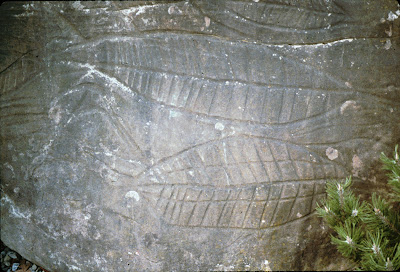
In the ever proceeding scramble to identify the earliest, or oldest, rock art, we have another claim, this time from Europe. In the category of finger marks may I have the envelope please? And our winner is - - finger fluting on the cave walls of La Roche-Cotard left there by Neanderthals.

La Roche-Cotard finger fluting. Image from sci.news.

“The oldest known engravings in Europe, discovered in a French cave sealed up for tens of thousands of years, likely weren’t crafted by modern humans but rather Neanderthals, a new study finds. Within the cave of La Roche-Cotard 150 miles (240 kilometers) southwest of Paris, the researchers analyzed a series of non-figurative markings thought to be made by ancient human fingers, according to a study published – in the journal PLOS One. The cave had been sealed up by sediments until the late 19th century. Modern excavations at the site have yielded numerous stone tools whose style is associated with the Neanderthals, suggesting that they created the art.” (Killgrove 2023) In addition to the style of stone tools the investigators used hard dating to infer the age of the marks.

The finger marks themselves were not dated, but optical stimulated luminescence dating told the investigators when the cave became inaccessible due to sedimentation. “OSL dating indicates that the sediment deposition closed the cave > 51 ka (95% confidence) ago, or at 57 ± 3 ka (68% confidence interval). This age makes access to the cave interior by anatomically modern humans (AMH) highly unlikely, as we believe that evidence for their arrival in Western Europe prior to 45 ka - is not yet demonstrated. The non-figurative engraved marks at La Roche-Cotard are necessarily older than 57 ± 3 ka, and can be, therefore, confidently stated to be of Neanderthal origin.” (Marquet, Jean-Claude et al., 2023) This adds even more proof of the cognitive sophistication of our hominin relatives.

La Roche-Cotard finger fluting. Image from sci.news.

While the term ‘graphic productions’ may be a little overly optimistic for the collections of markings left on the cave wall, they marks were made intentionally and apparently by hominins, not cave bears or other fauna.“The graphic productions identified on the walls of La Roche-Cotard demonstrate a deliberate creative process visible in the spatial arrangement of the engraved marks on the cave wall. This is perhaps one of the most remarkable aspects evidenced by the creative ensemble at La Roche-Cotard. As discussed above, there is little graphic evidence associated with Neanderthals, and that is mainly on mobile objects (pebbles, slabs, bones…), rather than walls. In contrast, the walls of La Roche-Cotard testify to something different: the frequent repetition of thoughtful gestures, organized in space both on the wall surfaces and with respect to the cave as a whole.” (Marquet, Jean-Claude et al., 2023) I cannot go quite as far as Marquet’s last sentence in describing the marks, but I applaud his enthusiasm.

La Roche-Cotard finger fluting. Image from sci.news.

Now, of course, we have to address the question of whether finger-fluting is art and deserves to be lumped in with rock art. In the case of RockArtBlog I say yes. It is intentional modification to the cave wall in the same way that a magnificent painted animal on a cave wall is and that is the definition I am using.


NOTE: Some images in this column were retrieved from the internet with a search for public domain photographs. If any of these images are not intended to be public domain, I apologize, and will happily provide the picture credits if the owner will contact me with them. For further information on these reports you should read the original reports at the sites listed below.


REFERENCES:

Killgrove, Kristina, 2023, Neanderthals created Europe’s oldest ‘intentional’ engravings up to 75,000 years ago, study suggests, 21 June 2023, LiveScience.com. Accessed online 10 September 2025.

Marquet, Jean-Claude et al., 2023, The earliest unambiguous Neanderthal engravings on cave walls: La Roche-Cotard, Loire Valley, France, 21 June 2023, PLOS One, https://doi.org/10.1371/journal.pone.0286568. Accessed online 8 September 2025.


Saturday, March 1, 2025

IS A MODIFIED CAVE FLOOR IN FRANCE THE EARLIEST KNOWN MAP?

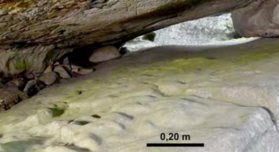
View out of the Ségognole 3 rock shelter, Fontainbleu, in the Paris Basin, France. Online image, public domain.

Readers of RockArtBlog may remember that I have been a skeptic of many claims of ancient maps in various rock art media. This one, however, might actually be real. An apparent carved stone map has been discovered at Fontainbleu, outside of Paris. “Researchers have unearthed what may be the world’s oldest three-dimensional map, located in the Paris Basin. Found within a quartzitic sandstone megaclast at the Ségognole 3 rock shelter.” (Science News Today 2025)

Geophysicists Medard Thiry of Mines Paris – PSL Centre of Geosciences,  and Anthony Milnes from the Adelaide School of Physics, Chemistry and Earth Sciences noticed signs of carving on the cave floor and, after investigating further recognized two features apparently produced by humans. Thiry and Milnes surveyed water courses in the cave and found a pattern of human manipulation and modification. (Cassella 2025)

Supposed map carved into the floor of the cave. Photograph by Pascal Crapet, Fontainebleau, Courtesy of Médard Thiry.

“Around 20,000 years ago, the prehistoric people who sheltered in this cave carved and smoothed the stone floors to create what looks like a miniature model of the surrounding valley, according to geoscientists Medard Thiry and Anthony Milnes. As water from the outside world trickled through carefully laid-out channels, basins and depressions in the cave, the surface would have come alive with rivers, deltas, ponds, and hills.” (Cassella 2025)

Along with this landscape another set of grooves seem to illustrate a portion of the torso of a female figure with pelvis, groin, thighs and hips.

"Thanks to his extensive research on the origins of Fontainebleau sandstone, Dr. Thiry recognized several fine-scale morphological features that could not have formed naturally, suggesting that they were modified by early humans. 'Our research showed that Paleolithic humans sculpted the sandstone to promote specific flow paths for infiltrating and directing rainwater, which is something that had never been recognized by archaeologists,' Thiry says. 'The fittings probably have a much deeper, mythical meaning, related to water. The two hydraulic installations - - that of the sexual figuration and that of the miniature landscape - - are two the three meters from each other and are sure to relay a profound meaning of conception of life and nature, which will never be accessible to us.'" (Pacillo 2025)

Carved female torso inside the cave opening. Photograph by Médard Thiry.

Rainfall seeping into the cavern through fractures runs across the cave floor where is pools in low points. The largest and most elevated of these pools shows indications of having been enlarged and deepened by humans, and it functions as the source of water for the features. Water from this basin runs further into the cave, splitting into two streams with one running through the carved pelvis where it runs out of the ‘vulva,’ and the other running into the carved map. The hills or mounds in the carved landscape are rounded and some are encircled by deep grooves. (Cassella 2025)

Previously, the oldest known three-dimensional map was a rock slab carved with a local river network and landscape features about 3,000 years ago in the Bronze Age. The Segognole 3 map provides a new view of these prehistoric people's perception of the world around them. (Science News Today) 

These reports certainly seem credible and may, indeed, represent the oldest map in the world. I, however, am more interested in the female representation and the purposeful way the water reportedly interacts with it, providing animation of a biological process. In any case, the two features provide some insight into the cognitive processes of people in that distant age.

NOTE: One or more images in this posting were retrieved from the internet with a search for public domain photographs. If any of these images are not intended to be public domain, I apologize, and will happily provide the picture credits if the owner will contact me with them. For further information on these reports you should read the original reports at the sites listed below.

PRIMARY REFERENCES:

Cassella, Carly, 2025, Earliest Known 3D Map Found in Prehistoric French Cavern, Say Experts, 7 January 2025, https://www.yahoo.com/news/. Accessed online 14 January 2025.

Pacillo, Lara, 2025, World’s oldest 3D map discovered, 13 January 2025, University of Adelaide, https://www.sciencedaily.com. Accessed online 14 January 2025.

Science News Today, 2025, World’s Oldest 3D Map Unearthed in French Cave, 17 January 2025, https://www.sciencenewstoday.org. Accessed online 22 January 2025.

SECONDARY REFERENCE:

Thiry, Médard et al, 2024, Palaeolithic map engraved for staging water flows in a Paris Basin shelter, Oxford Journal of Archaeology. DOI: 10.1111/ojoa.12316.

Saturday, October 26, 2024

PORTABLE X-RAY FLUORESCENCE ANALYSIS OF PIGMENTS IN CAVE PAINTINGS:

Entrance to Font du Gaume cave, France. Photograph by Don Hitchcock, Donsmaps.com.

An important development in the potential dating of European cave art has been made by the use of portable x-ray fluorescence equipment to analyze the pigments used in the paintings. If the black paint is based on Manganese dioxide there is no possibility of radiocarbon dating it, however, if black paint is based on charcoal can be identified, then the possibility of radiocarbon dating does exist. The scientific team carried this analysis out in Font de Gaume Cave in France.

A variety of photographic techniques were used to enhance variations in black pigments in the paintings. These small variations were assumed to be perhaps related to the use of different black pigments which could then be analyzed with the portable x-ray fluorescence (pXRF), and micro-raman spectroscopy.

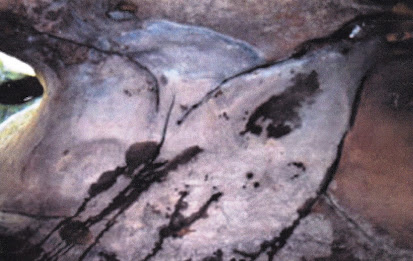
Painted bison, Font du Gaume, France. From Leroi Gourhan.

“From a technical and a stylistic perspective, two types of animal representations can be distinguished. On the one hand, we have lifelike painted bison treated with bi- or polychromy, where painting and engraving are associated with the relief effects of the wall for an exceptional rendering. Different shades can be observed, ranging from black to brown and from red to yellow as well as the designs being mainly done in black and red. The archetype of “hyperbison” is found in many of these individuals. There are also drawn naturalist bison with black lines. On the other hand, there are graphical entities of different animals as well (bison, horse, deer) that are drawn and exhibit a more schematic style. Capitan et al. hypothesized at least two different styles of representations right after the discovery of the cave art in Font-de-Gaume. Leroi-Gourhan also stated that at least two creation steps are noticeable from the outset in the Font de Gaume cave. Evidence of different creation steps of the ornamentations have also been provided for the Bull Rotunda in the Lascaux cave and Pech-Merle, Lot, France–Henri Moissan, a French Nobel prize winner, identified in 1902 Fe and Mn oxides in the coloring matter samples from the Font-de-Gaume decor. Today, this UNESCO world heritage site is protected and sampling is only allowed by authorities in highly exceptional cases. The awareness of the fragility of decorated cave sites has led to a transition from micro-sampling to non-invasive analyses, carried out in-situ. Scientific imaging was used to record figures and panels of the Font-de-Gaume cave. Areas of interest could be selected for in-situ point analyses by portable X-ray fluorescence analyses (pXRF) and micro-Raman spectroscopy.” (Reiche et al. 2023:1-2)

Figures photographed in different spectra of visible light. Font du Gaume, France. Photographs by A. Maigret.

Along with the pXRS and micro-Raman spectroscopy, the rock art was photographed with a range of color filters which also helped enhance the analysis of some pigment differences. “Photographic imaging allows observing coloring matters at the scale of the panels and figures in the cave. The points for chemical analyses by pXRF and for mineralogical analyses by portable micro-Raman Spectroscopy can be judiciously chosen. This also limits the number of analyses required per figure and allows extrapolating the results of the physico-chemical analyses to the whole figure or at least the remaining visible part of it. The results of the analysis can therefore be read and discussed in the prehistoric context at the scale of a figure, a panel or even an area in the cave.” (Reiche et al. 2023)

“Portable XRF analyses were conducted in-situ in the cave with the portable ELIO device of the brand XG-Lab/Bruker® of the C2RMF fixed on a tripod with two axial translations (forward and backwards as well as left to right) and three rotation axes. This standardized device holds a 50 kV X-ray tube with a Rh anode that can deliver a power of 4 W. The detector is a 17 mm2 SDD whit an energy resolution of 140 eV at the Mn Kα line. It is also equipped with a collimator able to focus the beam into a 1 mm spot, two lasers, a positioning system and a tripod. The distance between the measuring head and the wall is 5 mm. It also benefits of a camera for the observation of the measurement spot. The experimental conditions were 600 s of acquisition time with 40 kV and 40 μA delivered by the X-ray tube.” (Reiche et al. 2023) The first known use of pXRF equipment to analyze pictographs was by Bonita Newman and Lawrence Loendorf in 2005. (Newman and Loendorf 2005)

Font du Gaume reindeer, France. Image from Pinterest.

“The mobile Raman measuring device used was developed by Jobin–Yvon HORIBA and consists of components that can be easily moved during a measurement campaign. The device is equipped with a “Superhead SH 532” measuring head with an Olympus “long working distance” objective. In-situ Raman measurements require an arrangement with high flexibility and high stability at the same time. A working distance of 10 mm between the head and the wall guarantees the safety of the painted wall.” (Reiche et al. 2023) Raman spectroscopy detects the vibrational frequency of molecules, and since the molecules of each element vibrate at different frequencies the various elements can be distinguished. Micro-raman spectroscopy is raman spectroscopy through a microscope so a very small area can be analyzed, like a painted line or dot.

These studies determined that some black lines, dots, and areas were created using charcoal as the black pigment meaning that these could also be dated using radiocarbon (C14) dating. These techniques could be reasonably expected to be reliable in other instances of painted pictographs as well.


NOTE: Some images in this posting were retrieved from the internet with a search for public domain photographs. If any of these images are not intended to be public domain, I apologize, and will happily provide the picture credits if the owner will contact me with them. For further information on these reports you should read the original reports at the sites listed below.


REFERENCES:

Baum, Stephanie, 2023, First discovery of carbon-based cave art in France's Dordogne region could pave way for precise radiocarbon dating, 18 December 2023, https://phys.org/news/2023-12-discovery-carbon-based-cave-art-france.html. Accessed online 29 December 2023.

Reiche, Ina, Yvan Coquinot, Antoine Trosseau and Anne Maigret, 2023, First discovery of charcoal based prehistoric cave art in Dordogne, 14 December 2023, Nature Portfolio, Scientific Reports, 13:22235, https://doi.org/10.1038/s41598-023-47652-1. Accessed online 29 December 2023.

SECONDARY REFERENCE:

Newman, Bonita, and Lawrence Loendorf, 2005, “Portable X-Ray Fluorescence Analysis of Rock Art Pigments.” Plains Anthropologist, vol. 50, no. 195, pp. 277–83. JSTOR, http://www.jstor.org/stable/25670828. Accessed 9 Sept. 2024.

Saturday, August 24, 2024

THE DANGER TO COSQUER CAVE ART:

Location of Cosquer Cave. Image from  thearchaeologist.org.


Diagram of Cosquer Cave. Image from thearchaeologist.org.

Rising sea levels – that, in a nutshell, is one of the greatest dangers to the magnificent art in Cosquer Cave, the undersea Paleolithic site in the Mediterranean off the coast of southern France. Sea levels have risen threatening art painted on the cave walls. The cave entrance is 37 meters (120 feet) below the Mediterranean and three cave divers died exploring the cave before the art was discovered. Indeed, the rising sea level has already claimed some of the paintings in the long passageway leading upward to the main chamber. So human induced climate change is now affecting our field of study – cave art.

Three horses, Cosquer Cave, France. Internet image, public domain. Note, the water level is right below the lower horses.  

Aurochs image, Cosquer Cave, France. Internet image, public domain. 

A project to record all of the art in detail has been led by a French archaeologist named Luc Vanrell, “the cave and its treasures, some dating back more than 30,000 years, are in grave danger. Climate change and water and plastic pollution are threatening to wash away the art prehistoric men and women created over 15 millenia. Since a sudden 12-centimeter (near-five-inch)rise in the sea level there in 2011 Vanrell and his colleagues have been in a race against time to record everything they can. Every year the high water mark rises a few more millimeters, eating away a little more of the ancient paintings and carvings.” (Rochiccioli 2022)


Bison, Cosquer Cave, France.  Image from bradshawfoundation.com.

“To reach the only place in the world where cave paintings of prehistoric marine life have been found, archaeologists have to dive to the bottom of the Mediterranean off southern France. Then they have to negotiate a 137 meter (yard) natural tunnel into the rock, passing through the mouth of the cave until they emerge into a huge cavern, much of it now submerged.” (Rochiccioli 2022)

                
The Great Auks, Cosquer Cave, France. Image from bradshawfoundation.com.

Ibex, Cosquer Cave, France. Image from bradshawfoundation.com.

“In the cave, marine animals make up a significant proportion of the figures. Auks, seals, fish and various markings that may represent jellyfish were painted or engraved on the walls. An auk can also be seen on the ‘ceiling’. This is probably a great auk, which was still widespread in the North Atlantic in the nineteenth century.” (Archaeologist 2022)

Megaceros, Cosquer Cave, France. Image from bradshawfoundation.com.

While there is no practical way to save the original art in the foreseeable future, the French are reproducing the art cave up on dry ground. “The idea of making a replica of the site was first mooted soon after the cave was discovered. But it wasn’t until 2016 that the regional government decided that it would be in a renovated modern building in Marseille next to Mucem, the museum of European and Mediterranean civilizations at the mouth of the city’s Old Port. Using the 3D data gathered by the archaeological teams, the 23-million-euro ($24-million) replica is slightly smaller than the original cave but includes copies of all the paintings and 90 percent of the carvings, said Laurent Delbos from Klebert Rossillon, the company which copied the Chauvet cave in 2015.” (Bartek 2022)

               
Inside the replica Cosquer Cave, France. Internet image, public domain.     

What an absolutely wonderful project, a three dimensional exact reproduction of the bulk of the cave and its art. Not content with just recording everything for posterity the French are reproducing the experience of visiting Cosquer Cave, and making it available to the people who would never have had a chance to dive to the real one.

NOTE: Some images in this posting were retrieved from the internet with a search for public domain photographs. If any of these images are not intended to be public domain, I apologize, and will happily provide the picture credits if the owner will contact me with them. For further information on these reports you should read the original reports at the sites listed below.

REFERENCES:

Archaeologist (The), 2022, The Paleolithic Mysteries of the Underwater ‘Cosquer Cave’ in France, 3 August 2022, https://www.thearchaeologist.org. Accessed online 9 July 2024.

Bartek, Jan, 2022, Race To Save Magnificent Underwater Stone Age Paintings Hidden In The Cosquer Cave, 6 June 2022, https://www.ancientpages.com. Accessed online 17 June 2024.

Rochiccioli, Pierre, 2022, Race to save undersea Stone Age cave art masterpieces, 30 May 2022, https://phys.org/news/. Accessed online 17 June 2024.

Sunday, June 2, 2024

CAVE ART AS A REPOSITORY FOR THE SPIRITS OF HUNTED ANIMALS:

Animal frieze from Chauvet Cave, France. Online image, public domain.

An approach that turns the old idea of cave art as ‘hunting magic’ on its head imagining the art after the fact instead of before the hunt.

“During the first half of the twentieth century Abbé Breuil’s interpretation of cave paintings as simple hunting magic prevailed. His idea was that the paintings tried to bewitch the animals to ensure success in hunting. According to French archaeologist André Leroi-Gourhan, this idea originated from some extremely rare paintings depicting wounded or speared animals in European caves. Some prehistorians believed that the depicted animals were painted to encourage fertility of the game.” (Ijäs 2017:72)

Horses and rhinoceros, Chauvet Cave, France. Online image, public domain.

Many groups of indigenous hunters feel that the animals they harvest are willingly sacrificing themselves to the hunter to provide food and raw materials for his well-being, and they have customs of thanking the animal for giving itself up. For instance there are records of Inuit hunters not only thanking the dead game animal for sacrificing itself, but also pouring a little water in its mouth to give it a drink. “When Inuit kill an animal in the traditional way, they give it a drink of water or, if there is no water, they melt snow with their mouths.” (Laugrand and Oosten 2015:210) This act is a way of giving back to the animal who gave itself up to the Inuit hunter.

Such an act of giving back illustrates the attitude of honor, respect, even kinship that an indigenous hunter feels toward his quarry. “For hunter-gatherers, occupying environments where animal protein is essential to subsist, the hunt is an act of necessity. Such events, however destructive and aggressive as they tend to be, are commonly associated not with the hunter’s sense of malice, disdain, or even casual disinterest, but an abiding sense of respect and honor for his prey.” (Buckner 2020)

Horses, Chauvet Cave, France. Online image, public domain.

“Respect for animals was organized by many rules that varied for each animal. Some basic principles applied to all animals. An animal should not be abused, or ridiculed. Unnecessary suffering should be avoided.” (Laugrand and Oosten 2015:66) They did not need a local chapter of the SPCA, basic human decency was apparently enough.

Among indigenous cultures, hunting is more than just a way to procure meat. Hunting also has deeply meaningful cultural and spiritual significance governing the relationships of the hunter to the animals he is pursuing.

Horse, Axial Gallery, Lascaux, Image from Lewis-Williams, 2002, The Mind in the Cave, Fig. 23.

“Hunting is not just a means of survival for indigenous peoples; it also plays a significant role in their cultural and spiritual practices. Many hunting rituals are deeply intertwined with indigenous ceremonies and belief systems. These rituals often involve prayers, songs, and offerings to show gratitude to the animals for their sacrifice. The animals are seen as kin and are honored accordingly.” (Thomas 2023) This is pretty much at the core of their culture; their ceremonies and rites are often centered on hunting success and the relationship with the animals.

The interaction of the hunter and the hunted is seen as a reciprocal relationship. “Among the Cree Indians of northern Canada, it is believed that animals intentionally present themselves to the hunters to be killed. The hunter consumes the meat, but the soul of the animal is released to be reclothed with flesh. Hunting there, as among many northern peoples, is conceived as a rite of regeneration: consumption follows killing as birth follows intercourse, and both acts are integral to the reproductive cycles, respectively, of animals and humans. However, animals will not return to hunters who have treated them badly in the past. One treats an animal badly by failing to observe the proper, respectful procedures in the process of butchering, consumption and disposal of the bones, or by causing undue pain and suffering to the animal in killing it.” (Ingold 1994:9) So, the hunter not only has to behave correctly in respect to the animal he is hunting, the animal’s soul also has to be given due respect in order for the compact between hunter and prey to be properly fulfilled.

Auroch, horses and deer, Lascaux Cave, France, Online image, public domain.

“The animals in the environment of the hunter do not simply go their own way, but are supposed to act with the hunter in mind. They are not just ‘there’ for the hunter to find and take as he will, rather they present themselves to him. The encounter, then, is a moment in the unfolding of a continuing – even lifelong – relationship between the hunter and the animal kind (of which every particular individual encountered is a specific instance). The hunter hopes that by being good to animals, they in turn will be good to him.” (Ingold 1994:14-15) In other words, it is a reciprocal relationship with both human society and the animals having roles to play, and if the roles are played well success is expected to follow.

“For many Native Americans, the act of hunting was about more than just acquiring food. It was a way to connect with the natural world and to show respect for the animals that were being hunted. Hunting was also a way to teach young people about the ways of their culture and to instill in them the values of their people. ‘We should be grateful for the gift of the animals because they were created to feed the Anishnaabe people, giving them strength.’ It was important for hunters to pray and express gratitude when they took the life of an animal, as taking that life would allow them to feed their own families.” (Mika 2023)

For the Anishnaabe people “They believed that the animals were created to feed the Anishnaabe people, to give us strength, and we should be thankful for that gift. It was very important for the hunter to pray and give thanks when taking the life of an animal, as taking that life meant that he could feed his own family. It was also said that if we stopped hunting and fishing, that we were no longer grateful for the gifts that the creator had given us – therefore it is an act of cultural tradition to not only hunt and fish, but to give thanks by placing sacred medicines when an animal life has been taken for the survival of the tribe.” (Tribal Trade Co. 2020)

Aurochs, horses and deer, Lascaux Cave, France, Online image, public domain.

“The Native American Hunting Practices are based on the unity of nature and humans. They recognize that nature is not only a sustainer of life, but it is also an essential part of human beings. Also, hunting is a way of life and a sacred act of honoring the animal’s spirit. However, with the encroachment of colonization, these practices were misunderstood, exploited, and became a pain point for Native Americans.The primary aim of Native American Hunting Practices was to provide food for the community while ensuring that every part of the animal was utilized to avoid wastage. The practice was done in reverence for the animal’s life and the understanding that its sacrifice would provide for the community.” (Justo 2023)

To the north Inuit beliefs were much the same. “Many Inuit believed that animals offered themselves to the hunter in order to be killed. If the animals were hunted they would multiply; if they were not hunted, they would feel neglected and disappear. - Animals were thus often described as giving themselves to the hunters who would make good use of their meat.” (Laugrand and Oosten 2015:41)

Among the Inuit again “When departing from a hunting area the heads of the caribou must always face in the direction in which the party is setting out. The soul of the animals slain will then follow the same course and good hunting will result.” (Laugrand and Oosten 2015:241)

The Inuit believe that the game animals want to give themselves to the hunter. By doing so their soul is released to be, in effect, reborn. A hunter who passes up an opportunity to harvest a game animal risks insulting it and being shunned by all game thereafter. “Killing game is not only a necessity to survive, it is also an obligation placed upon the hunter by the animals themselves. Hunting is not a matter of choice, but a moral obligation one cannot escape. Only by hunting can the Inuit as well as the animals prosper. (Laugrand and Oosten 2015:343)

While most of the examples I have cited refer to Native American or Inuit peoples, the situation is essentially the same among indigenous people worldwide. The relationship between hunter and hunted is one of respect, often even courtesy. And, if the proper attitude and rituals are maintained, the soul of the animal is freed to be reborn, to come back to the hunter again in the future. In the Inuit belief, the soul of a sea mammal such as seal or walrus that is killed returns to Sedna, the ‘Sea Woman’ to wait for its rebirth.

So, to return to the proposition that the cave art might have been produced after the successful hunt instead of before it, there could be a couple of motives involved. The first, of course, might be bragging rights, to commemorate the success of a difficult hunt. The cave picture might have been the visual equivalent of a fisherman’s tale. The second might well have been to serve as a repository for the soul of that animal until it can be reborn. In a number of ways this would seem to make more sense than the “Increase Theory” of hunting magic, that multiplying images of a certain animal would result in the increase of the numbers of the actual animal in the landscape.  Keeping in mind that for many indigenous peoples the soul of an animal taken by a hunter will recycle, will be reborn as a new animal if treated properly and with respect. What if, after a successful hunt, the hunter returned and produced the picture of the animal on a cave or cliff wall to provide a repository for the soul of his dead prey until it could be reborn. In the same way that the soul of an Inuit hunter’s sea mammal victim returned to Sedna to await rebirth, then, the animals, knowing their souls would be provided for, would be more likely to be willing to give themselves to him in the future. The artist would then be part of the natural recycling of the soul of this animal. This could also an explanation for the palimpsests of large numbers of some animal images, each soul would need a new representation. Finally, this also might explain the spiritual and ritual nature of cave art.

NOTE: Some images in this posting were retrieved from the internet with a search for public domain photographs. If any of these images are not intended to be public domain, I apologize, and will happily provide the picture credits if the owner will contact me with them. For further information on this subject you should read the original reports at the sites listed below.

REFERENCES:

Buckner, William, 2020, The Psychic Toll of Severing the Hunter-Prey Relationship, 14 October 2020, Nautilus, https://nautil.us. Accessed online 20 April 2024.

Ijäs, Mikko, 2017, Fragments of the Hunt, Persistence Hunting, Tracking and Prehistoric Art, Doctoral Thesis, School of Arts, Aalto University, Espoo, Finland.

Ingold, Tim, 1994, From Trust to Donimation, An alternative history of human-animal relations, pp.1-22, in Animals and Human Society, Changing Perspectives, Audrey Manning and James Serpell (editors), 1994 Rutledge, New York.

Justo, 2023, Exploring Traditional Native American Hunting Practices: A Cultural Legacy, 31August 2023, https://nativetribe.info. Accessed online 20 April 2024.

Laugrand, Frederic, and Jarich Oosten, 2015, Hunters, Predators and Prey, Inuit Perceptions of Animals, Berghahn Books, New York and Oxford.

Mika, 2023, The Sacredness of Hunting in Native American Culture, 1 March 2023, https://www.indiancountryextension.org. Accessed online 17 April 2024.

Thomas, Connor, 2023, Exploring Hunting Traditions of Indigenous Peoples, 11 September 2023, https://www.findahunt.com. Accessed online 15 October 2023.

Tribal Trade Co., 2020, Cultural Traditions of Native American Hunting & Gathering, April 2020, https://tribaltradeco.com. Accessed online 17 April 2024.

Saturday, November 4, 2023

THERE’S SOMETHING FISHY ABOUT THIS PETROGLYPH – SALMON:

Salmon jumping a waterfall. Internet image, public domain.

Improved analytical techniques have made it possible to trace hominin use of fish for food back a considerable distance in the historical record. In 2011 Hardy and Moncel wrote about fish remains associated with Neanderthal occupation 125 – 250,000 years ago.

“Fishing and fowling are often used as markers of modern human behavior, despite their remains having been reported from numerous early hominin (as far back as 1.95 Ma) and Neanderthal sites. In fact, fishing is difficult to detect in the archaeological record for several reasons: 1) many coastal sites are lost due to rise in sea level; 2) fish bones are fragile and may be lost due to taphonomic processes; 3) many fish bones are small and may require specialized recovery techniques; and 4) the widespread assumption that fishing is a modern human behavior may lead investigators not to look for evidence in the first place. The argument that Neanderthals did not fish has recently been bolstered by stable isotope research that suggests that Neanderthal dC13 values do not match those of fish. This evidence must be treated with caution, however, as dC13 for fish can vary greatly, particularly from freshwater fish.

Sites with possible evidence of Neanderthal consumption of fish include Milan, Almada and Abreda Caves, Spain, Grotte XVI, France, Devil’s Tower and Vanguard Cave, Gibraltar, Raj Cave, Poland, Grotta Maggiore, Italy, UstKanskaya Cave, Siberia, and Figueira Brava Cave, Portugal. Evidence at these sites includes the recovery of osteological remains, fish bones in association with hearths, and cut-marks on fish bones. At Payre, residues and use-wear indicative of fish are found in the absence of osteological remains. Fish may have been processed off-site (at local streams or rivers), and the tools returned to the site or fish may have been processed on site but the bones did not preserve. In Level Fa, all of the artifacts with fish residues are located in one square meter near the wall, a possible indicator of a specialized intrasite activity area. These results highlight the difficulty in recognizing fish consumption archaeologically and suggest that fish consumption by Neanderthals may be underrepresented. The growing list of sites with fish remains as well as the detection of fish processing in the absence of fish bones at a site further suggests that fish consumption should not be seen as exclusively in the domain of modern humans.” (Hardy and Moncel 2011:7-8) I know of no rock art of fish attributable to Hominin (including Neanderthal) sources but we now know they procured them somehow and ate them.

Hardy et al. (2013:30) again reported on fish remains at Abri du Maras. Remains found there include bones and scales of chub and perch. “Estimated body weights range between 550 and 850 g. Few predators are able to catch and carry fish of this size. Hence, the possibility of Neanderthals as predators cannot be discarded, and the presence of these fish remains in layer 4 may be considered the result of anthropic activity. Once again, the combination of residue and zooarchaeological analyses provides corroborating evidence and strengthens the case of Neanderthal fishing.” (Hardy et al. 2013:30) So Neanderthals caught and ate fish, probably including salmon, but as far as we know they did not leave any images of fish in rock art.

Salmon carving in Abri Poisson Cave, France. Internet image, public domain.

Salmon carving in Abri Poisson Cave, France. Showing attempted removal of the carving from the cave ceiling. Photograph Heinrich Wendel.

Then we reach the Paleolithic Period and the high point of cave art. Abri du Poisson (Fish Shelter) is known for a beautiful relief carving of a salmon. A series of holes were drilled around the fish and chiseling had begun to undercut that section when the vandals were discovered and saved. The damage can be seen in these photographs of the panel in situ. “The shelter is discovered by Paul Girod in 1892 which recognizes an Aurignacian level . It was not until 1912 that Jean Marsan identified the superb fish that made the site famous. Represented life-size (1.05  m ), it is engraved and carved in low relief on the ceiling of the vault, highlighted with red color. It is a becquart salmon, with its jaw turned up; the attitude is characteristic of the male exhausted by spawning. The theme is rare since only a dozen fish have been identified in Paleolithic cave art. Other parietal works have since been identified by Christian Archambeau and Alain Roussot, including a black negative hand and incomplete animal engraved figures.The attribution of these works to the Gravettian (- 25 000 years) is likely; it makes engraved salmon one of the oldest representations of fish known in the world, possible testimony of prehistoric fishing activities.” (Wikipedia)

Carved reindeer antler. Lortet, Hautes Pyrenees, France. Internet image, public domain.

Somewhat later, during the Magdalenian Period (18,000 to 15,000 BC), an artist produced a carving on reindeer antler of wading or swimming reindeer with salmon swimming around their legs which was recovered from the Grotte de Lortet in France.

Broken carved bone salmon. Grotte de Lortet, France. Internet image, public domain.

Maz, D'Azil, France. Image from www.donsmaps.com.

Other carvings of salmon include a broken fragment of bone with the head of a salmon at one end, and a broken spear thrower with a salmon carved into it. One might almost be tempted to assume it was intended for spear fishing.

There are also representations of other fish in European Cave Art, indeed elsewhere in the world as well, but I am focusing on salmon in this column.

Closer to home, the culture of the Pacific Northwest Coast tribes of North American relied to a great extent on the availability of salmon.

“Salmon are an essential component of the ecosystem in Tsleil-Waututh Nation’s traditional, ancestral, and contemporary unceded territory, centred on present-day Burrard Inlet, BC, Canada, where Tsleil-Waututh people have been harvesting salmon, along with a wide variety of other fishes, for millennia. Tsleil-Waututh Nation is a Coast Salish community that has called the Inlet home since time immemorial. This research assesses the continuity and sustainability of the salmon fishery at təmtəmíxʷtən, an ancestral Tsleil-Waututh settlement in the Inlet, over thousands of years before European contact (1792 CE). We apply Zooarchaeology by Mass Spectrometry (ZooMS) analysis to 245 archaeological salmon vertebrae to identify the species that were harvested by the ancestral Tsleil-Waututh community that lived at təmtəmíxʷtən. The results demonstrate that Tsleil-Waututh communities consistently and preferentially fished for chum salmon (Oncorhynchus keta) over the period of almost 3,000 years. The consistent abundance indicates a sustainable chum salmon fishery over that time, and a strong salmon-to-people relationship through perhaps 100 generations. This research supports Tsleil-Waututh Nation’s stewardship obligations under their ancestral legal principles to maintain conditions that uphold the Nation’s way of life.” (Efford et al. 2023) Burrard Inlet, British Columbia, is on the east side of the Strait of Georgia, where the modern city of Vancouver is located. Approximately 40 miles west across the open water is Nainamo on Vancouver Island, British Columbia, Canada. These are both in the Coastal Salish culture group.

“Tsleil-Waututh is a distinct, Indigenous Coast Salish nation whose ancestral and contemporary territory is centred on səlilwət, part of the inlet ecosystem that is now also known as Burrard Inlet, British Columbia, Canada. Since European contact in 1792 CE, colonial development and resource extraction have driven dramatic change and development in Tsleil-Waututh territory to the extent that today it includes Canada’s busiest port and metropolitan Vancouver, a city of 2.5 million people. Consequent damage to and loss of vulnerable ecosystems, habitats, and animal and plant populations have impacted Tsleil-Waututh ways of life and greatly reduced their ability to harvest important traditional foods. Despite these impacts, the area is rich with archaeological evidence of Tsleil-Waututh’s relationship to the lands and waters throughout their territory and confirms Tsleil-Waututh oral histories and traditional knowledge of continuous connections to land, waters, plants, and animals.” (Efford et al. 2023)

“Both oral histories and the archaeological evidence identify chum as being particularly important for Tsleil-Waututh communities over the millennia. The consistency of the comparative abundance of salmon species across time suggests that Tsleil-Waututh Nation’s chum salmon fishery was a stable and sustainable salmon fishery, maintained over the course of almost 3,000 years. We would expect to see a drop off in the abundance of chum salmon over time, or a switch to another species as the most abundantly harvested, if the fishery had been unsustainable, or if there had been a major ecological impact. Instead, through this work as others, we see consistent use of salmon, particularly chum salmon, as well as herring, anchovy, and eulachon over millennia.” (Efford et al. 2023)

In their 2018 article on rock art of the Tsleil-Waututh people Arnett and Morin purposely avoided ascribing any particular identities or meanings to the imagery, focusing instead on their cultural significance of marking important locations to the Tsleil-Waututh people.

Nanaimo, Vancouver Island, British Columbia, To Welcome the Salmon Back From the Sea, removed from Jack Point, Vancouver Island. Photograph J&E Faris, 1992.

“In this article we have described the specific historical and cultural context of rock art production in the territory of one Coast Salish group. The rock paintings are best understood in terms of marking culturally significant places in the Tsleil-Waututh landscape so that future generations might know their significance.” (Arnett and Morin 2018) Their paper included no illustrations that could be identified as images of salmon. As I stated above, however, as a branch of the Coastal Salish culture they were culturally related to the people who produce other rock art of the area. One particularly important concentration of Salish is found at Nainamo on Vancouver Island, and, at Nainamo, there are images of salmon. These are on a boulder that was recovered from Jack Point in Vancouver Island, which is just a few miles to the east of Nainamo. This petroglyph panel on this boulder shows a group of salmon, supposedly to welcome the return of the salmon to begin their spawning run.

So, we find that across the Northern Hemisphere, and through a period of tens of millennia, salmon were considered a valuable food source and were of great spiritual and ceremonial significance.

NOTE: Some images in this posting were retrieved from the internet with a search for public domain photographs. If any of these images are not intended to be public domain, I apologize, and will happily provide the picture credits if the owner will contact me with them. For further information on these reports you should read the original reports at the sites listed below.

REFERENCES:

Choi, Charles Q., 2011, World’s Oldest Fish Hooks Show Early Humans Fished Deep Sea, 24 November 2011, https://www.livescience.com. Accessed online 30 August 2023.

Efford, Meaghan et al., 2023, Archaeology demonstrates sustainable ancestral Coast Salish salmon stewardship over thousands of years, 25 August 2023, https://journals.plos.org. Accessed online 31 August 2023.

Hardy, Bruce and Marie-Helene Moncel, 2011, Neanderthal Use of Fish, Mammals, Birds, Starchy Plants and Wood 125 – 250,000 years ago, August 2011, Plos ONE 6(8), DOI:10.1371/journal.pone.0023768. Accessed online 13 September 2023.

B.L. Hardy et al., 2013, Impossible Neanderthals? Making String, Throwing Projectiles and Catching Small Game during Marine Isotope Stage 4 (Abri du Maras, France), Quaternary Science Reviews 82 (2013) 23-40. Accessed online 13 September 2023.

Arnett, Chris and Jesse Morin, 2018, The Rock Painting/Xela:Is of the Tsleil-Waututh: A Historicized Coast Salish Practice, Ethnohistory 65:1, American Society for Ethnohistory. Accessed online 16 September 2023.

Walls, Alex, 2023, Salmon bones confirm sustainable chum fishery for 2,500 years under Tsleil-Waututh Nation, 20 August 2023, https://phys.org. Accessed online 30 August 2023.

Wikipedia, Fish Shelter, https://fr.wikipedia.org/wiki/Wikip%C3%A9dia:Accueil_principal. Accessed online 30 August 2023.