Sunday, July 22, 2012

NATIVE AMERICAN ASTRONOMY – THE CONSTELLATION GONAKADET/WASGO:


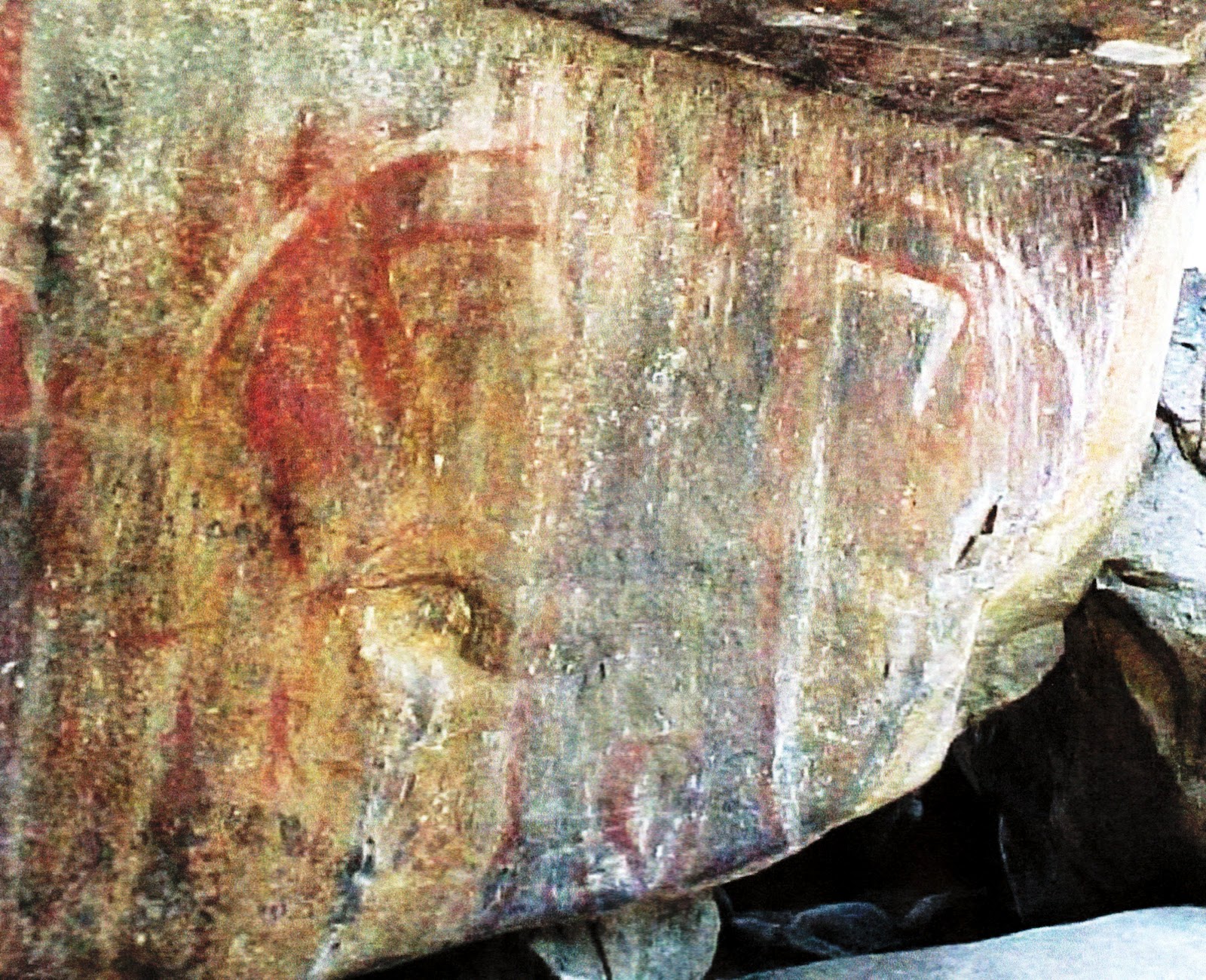
Gonakadet, Sproat Lake, Vancouver Island, B.C., Canada.
Photo: Peter Faris, 1995.

Northwest Coast tribes reportedly identified a constellation which was identified with the Sea Wolf, known as Gonakadet by the Tlingit, and Wasgo by the Haida. Next to "Raven," the most popular subject for totem pole art was the Gonakadet. Known also to the Haidas as "Wasgo," this monster is generally depicted as an aquatic wolf with some aspects of the killer whale. He is often depicted with the body and fins of a killer whale and the head of a wolf.

The Myth of Wasgo, the Sea Wolf
 “Wasgo, the Sea Wolf” also known as Sea-Bear, is based on the Tlingit-Haida myth of “Gonakadet” the Lazy Son-in-Law. In one version, he appears as a half killer whale and half wolf, with two fins and a wolf’s tail. In a condensed interpretive version of the story, the son-in-law becomes the hero. His mother continually takes the young man as a lazy so-and-so in law. The young man, despite the chiding from the old woman, secretly trains at night and successfully traps the great mythological creature Wasgo. Stripping it of its coat and donning the immense fur, the young man is granted the supernatural powers of the great creature.
 The young man catches many sea animals such as salmon, seals and Killer whales. Each time, he would take his catch and place it on the beach in front of this mother-in-law’s house. All was accomplished before the break of dawn. The mother-in-law discovers the unclaimed bounty each morning, telling her people that she is a great shaman and has summoned the creatures up from the sea to feed the people of her village. The old woman continuously boasts of her catch, as it increases both in number and in size. At last, the young man brings in three Killer whales to please his mother-in-law. The battle was long, completely exhausting the spirit of the young hunter. Falling on the beach next to his catch the young man finds himself trapped within the heavy skin of the Wasco, dead to the world, as we know it. The mourning call of Raven, finalizes the death of the young hunter.

 The mother in law rises with the morning to discover the great whales and the unusual Sea Wolf. Looking into the Sea Wolf’s eyes, the mother in laws recognizes her son- in-law. She realizes that it was his talents all along that brought the great wealth to her people. The mother- in-law falls to the beach, and dies of shame.

I have not yet been able to find a reference which points to the actual constellation or group of stars in the night sky which represents the constellation Gonakadet/Wasgo to these people of the North American northwest coast. This is however, a clear reminder to us that indigenous people did not leave questions unanswered; they had an explanation for everything, just like we do. Their explanations just might not agree with ours.

Saturday, July 14, 2012

THE HAIRY MAN PICTOGRAPHS – PART II:


Hairy Family panel, Tule River Reservation, California. From: 
Strain, Kathy Moskowitz, 2012, Mayak Datat: The Hairy
Man Pictographs, published in The Relict Hominoid Inquiry,
1:1-12, Idaho State University, edited by Jeff Meldrum.


I continue now with a look at the meanings of the Hairy Man pictograph panel presented by Kathy Moskowitz Strain. Previously I discussed the interpretation by Garrick Mallery who described this panel as a “mourning” ceremony based upon his theory of gestural analysis.

Strain, on the other hand, took the eminently reasonable step of looking at ethnographic material on what the members of the Tule River Indian Tribe on the Tule River Reservation believe about the panel. In her presentation she stated that the pictographs are believed by the Tule River people to “depict how various animals, including Hairy Man, created People. Other stories tell why Hairy Man lives in the mountains, steals food, and still occupies parts of the reservation. Since the Tule River Indians equate Hairy Man to Bigfoot, the pictograph and stories are valuable to our understanding of the modern idea of a hair-covered giant.”

The first three stories were gathered by the Strain in the summer of 1992 from tribal elders and members. The main story tellers were Isadore Garfield, Leona Danby, and J.R. Manuel with help from others in attendance. As stories were told, information was either added or clarified until a written copy was produced and read back to the group. “How People Were Made” details how the pictographs at Painted Rock came to be and identifies the large figure on the main wall as Hairy Man. “When the People Took Over” explains why birds and animals live where they do today while “Food Stealing” is a simple story about Hairy Man and his fondness for an easy meal.

“How People Were Made” is a variation of the ubiquitous creation story in which all the animals discuss the qualities that humans should share with them, walk on two legs; talk; hand dexterity; etc. and then hold a race to determine which ones would be granted to the humans. Then the animals created the people. Hairy Man liked the result but when the new humans saw him they became frightened and ran away. This made Hairy Man sad and that is why the pictograph of him is crying. Perhaps it also explains why he is elusive today; he is trying to avoid frightening people.

“When People Took Over” explains how humanity multiplied and began to fill the land and take all the food. The animals got together again and divided up their roles and resources. Hummingbird would henceforth fly and feed on flowers, Trout would live in the water, and Eagle would fly and eat squirrels and deer, etc.

“Food Stealing” describes the belief that “in the old days, women learned never to leave their acorn meal unattended. They would spend all day pounding on the big rocks near the river, making the acorn meal, and then take it down to the river to leach it. They would then leave it in the sun to dry, but they would come back and it would be gone. They would find big footprints in the sand where they left the meal and they would know that Hairy Man took it. He likes Indian food and knows to wait until the acorn is leeched of its bitterness before taking it. We always wondered if he liked the sound of women pounding acorn and knew when to come and get food.”


Hairy Woman and Child, Tule River Reservation, California. From: 
Strain, Kathy Moskowitz, 2012, Mayak Datat: The Hairy
Man Pictographs, published in The Relict Hominoid Inquiry,
1:1-12, Idaho State University, edited by Jeff Meldrum.

Hairy Woman and Child, Tule River Reservation, California. From: 
Strain, Kathy Moskowitz, 2012, Mayak Datat: The Hairy
Man Pictographs, published in The Relict Hominoid Inquiry,
1:1-12, Idaho State University, edited by Jeff Meldrum.


“The last story, “Big Foot, the Hairy Man,” was collected by E. B. Johnstone in 1975 from tribal elders Ruby Bays and Jennie Franco. In 1973, at the request of the tribe, Johnstone (1975) began gathering some of the traditional stories told by members of the reservation. The daughter of a tribal elder, who had been the caretaker of the pictograph site in the early 1900s, identified Hairy Man as being the same as Bigfoot (Johnstone 1975, p. 5). Johnstone (1975, p. 19) further noted that Hairy Man was described by the Tule River Indians as “a creature that was like a great big giant with long, shaggy hair” and since Bigfoot also meets that description, the two were the same.”

“Big Foot, the Hairy Man
Big Foot was a creature that was like a great big giant with long, shaggy hair. He was good in a way, because he ate the animals that might harm people. He kept the Grizzly Bear, Mountain Lion, Wolf, and other larger animals away.
During hot summer nights all the animals would come out together down from the hills to drink out of the Tule River. Big Foot liked to catch animals down by the river. He would eat them up bones and all.
It was pleasant and cool down by the river on hot summer nights. That is when grown-ups liked to take a swim. Even though people feared that Big Foot, the hairy man, might come to the river, people still liked to take a swim at night. Parents always warned their children “Don’t go near the river at night. You may run into Big Foot.”
Now Big Foot usually eats animals, but parents said, “If he can’t find any animals and he is very hungry, he will eat you. We won’t know where you have gone or what has happened to you.”
Some people say Big Foot, the hairy man, still roams around the hills near Tule River. - Children are cautioned not to make fun of his picture on the painted rock or play around that place because he would hear you and come after you.
Parents warned their children, “You are going to meet him on the road if you stay out too late at night.” The children have learned always to come home early.”

So to the Tule River people have explained the Hairy Man pictographs as a record of their creation story, a reminder of how the animals and people who inhabit this world were assigned their life ways and habits, and as a place of spiritual power to Hairy Man.  This has also not addressed the presence of figures identified as the Hairy Woman and the Hairy Child, other than the assumption that they, along with Hairy Man, constitute a Hairy Family (which, of course, could be the case). Let us hope that some researcher will revisit the question and try to record stories explaining the Hairy Woman and Child. Still and all, Strain, in her paper has done a great service to us all by recording, explaining, and preserving this information. Thank you Kathy and well done.


REFERENCES:

Garrick Mallery
1989    Picture-Writing of the American Indian, 10th Annual Report of the Bureau of Ethnology to the Secretary of the Smithsonian Institution, 1888-’89, by J. W. Powell, Director, and subsequently republished by Dover Publications in 1972.

Johnstone, E. B.
1975    Big Foot and Other Stories. Tulare: Tulare Board of Education.

Strain, Kathy Moskowitz
2012    Mayak Datat: The Hairy Man Pictographs, published in The Relict Hominoid Inquiry,
            1:1-12 (2012), Idaho State University, edited by Jeff Meldrum.

Saturday, July 7, 2012

THE HAIRY MAN PICTOGRAPHS – PART I:

Strain, Kathy Moskowitz, 2012, Mayak Datat: The Hairy Man
Pictographs,published in The Relict Hominoid Inquiry, 1:1-12,
(2012), Idaho State University, edited by Jeff Meldrum.
Drawing of Hairy Man, from Strain, Kathy Moskowitz, 2012,
Mayak Datat: The Hairy Man Pictographs, published in
the Relict Hominoid Inquiry, 1:1-12, (2012), Idaho
State University, edited by Jeff Meldrum.


There is a recurring theme in writings about rock art that can be called gestural analysis, in general it is the application of sign language to the gestures and body positions of figures seen in rock art panels. Perhaps the most influential recent proponent of gestural analysis was LeVan Martineau, who, in his book The Rocks Begin To Speak claimed that he could read rock art panels like a book. I have always personally believed that it was a fiction book that he was reading (and writing). Martineau was by no means the first proponent of that idea. Back in the 1880s Garrick Mallery used gestural analysis to try to decipher rock art.

Garrick Mallery, Picture-Writing of the American Indian,
in the10th Annual Report of the Bureau of Ethnology
to the Secretary of the Smithsonian Institution,
1888-’89, by J. W. Powell, Director, republished
by Dover Publications in 1972. Page 638.

The pictograph panel in these illustrations was first published by Garrick Mallery in his encyclopedic “Picture - Writing of the American Indian” in the 10th Annual Report of the Bureau of Ethnology to the Secretary of the Smithsonian Institution, 1888-’89, by J. W. Powell, Director, and subsequently republished by Dover Publications in 1972. On pages 637 and 638 Mallery attempts to decipher the meaning of the panel by gestural analysis. In his imagination the figures are all making the gesture for rain referring to tears (eye rain) and they are apparently mourning  a very small figure in the middle of the composition which he identified as having died of starvation.

Now we have a scholarly look at this amazing pictographic panel from Kathy Moskowitz Strain, a professional archaeologist with the U. S. Forest Service at the Stanislaus National Forest in northern California. In her informative paper Strain applies the beliefs and stories of Hairy Man held by the Tule River Indian Tribe on the Tule River Reservation. According to members of the tribe, the thousand-year old pictographs “depict how various animals, including Hairy Man, created People. Other stories tell why Hairy Man lives in the mountains, steals food, and still occupies parts of the reservation. Since the Tule River Indians equate Hairy Man to Bigfoot, the pictograph and stories are valuable to our understanding of the modern idea of a hair-covered giant.”

“The Tule River Indian Reservation was established in 1873 on 54,116 acres and currently boasts a population of approximately 500 people. Today, although there are three federally recognized Yokuts tribes with associated trust lands, most descendents live off-reservation in various local communities and are part of non-federally recognized tribes. This article focuses on the Tule River Reservation and the beliefs and stories of Hairy Man held by the Tule River Indian Tribe.”

“Painted Rock, also known as CA-TUL-19, is a rockshelter associated with a prehistoric village. The site, located immediately adjacent to the Tule River, includes bedrock mortars, pitted boulders, midden and pictographs. The pictographs are located within the rockshelter, and are painted on the ceiling and walls of the shelter. The pictographs include paintings of a male, female, and child Bigfoot (known as the family), coyote (known as Coyote Eating the Moon), beaver, bear, frog, caterpillar, centipede, humans, eagle, condor, lizard and various lines, circles, and other geometric designs. The paintings are in red, black, white, and yellow.”

“Archaeologically, the village at Painted Rock was occupied in the late prehistoric, around 500 years ago. Since it is believed that the paintings were present prior to the village, the paintings are likely 500-1000 years old.”

I have written elsewhere on the various meanings of rock art, not only to the original creators but to later interpreters, be they prehistoric peoples or modern researchers.  In this case if the paintings were truly present prior to the village then we will have whatever they meant to the original creators. Then the inhabitants who built the prehistoric village would have had their explanation of the pictures. Then we have the interpretation of the modern inhabitants of Tule River Indian Reservation, which Strain has explained concern Hairy Man and his conflation with modern stories of Bigfoot. Finally we can add layers of interpretation by Garrick Mallery, and modern researchers.

My next posting will discuss this question of the meanings in a little more detail.

REFERENCES:

Garrick Mallery
1989    Picture - Writing of the American Indian, 10th Annual Report of the Bureau of Ethnology to the Secretary of the Smithsonian Institution, 1888-’89, by J. W. Powell, Director, and subsequently republished by Dover Publications in 1972.

Strain, Kathy Moskowitz
2012    Mayak Datat: The Hairy Man Pictographs, published in The Relict
            Hominoid Inquiry, 1:1-12, (2012), Idaho State University, edited by Jeff Meldrum.

Saturday, June 30, 2012

NEANDERTAL ROCK ART:

Panel of hands at El Castillo, Spain. LiveScience.com.

On April 21, 2012, in a posting entitled “Neandertal Use of Red Ochre Pigment,” I speculated that Neandertal rock art would be identified eventually, I just had no idea that it would happen so soon. A column at LiveScience.com dated June 14, 2012, written by Stephanie Pappas, announced the identification of a number of red ochre images on the walls of the Spanish cave El Castillo as dating to the Neandertal period.

These images are a panel of hands stenciled onto the cave wall made by placing the hand flat against the rock and blowing liquid red paint over it to outline the hand. These hands are also accompanied by some round red ochre spots that appear to have been blown directly onto the wall. The dating was done by uranium/thorium dating of the calcite layer over the paintings. Dating a number of caves gave a range of expected results but the date of 40,800 years B.P. for one of the red disks on the wall at El Castillo dates back to around the period that Homo sapiens first appeared in Europe. And a date of that age for the calcite layer means that the paint is some unknown number of years earlier. This raises the real possibility that some of the earliest imagery done at El Castillo could have been produced by Neandertal artists.

Reference: 
LiveScience.com

Saturday, June 23, 2012

INCORPORATION IN ROCK ART:


Black Rhinoceros (Diceros bicornis) petroglyph on rhinoceros
rubbed rock face. Fig. 17.8, Heyd and Clegg, 2005, p. 267,
Free State, South Africa.


The term “incorporation” in rock art generally refers to the inclusion of natural features of the rock surface in the design of the image on a rock art panel. On December 8, 2010, I published a posting on a rock face that had been polished by its use as a rubbing post by mammoths. A fascinating example of South African incorporation of animal rubbing on a rock art panel was reported by Sven Ouzman in his paper Seeing is Deceiving: Rock Art and the Non-Visual, pages 253-269, in Aesthetics and Rock Art, edited by Thomas Heyd and John Clegg, Ashgate Publishing Ltd., Aldershot, England, and Burlington, VT., 2005. In this paper Ouzman examines "episodes of use" of the image.

According to Ouzman the first use of this portion of the rock face was as a rubbing post by rhinoceroses and then it was later engraved with the image of a black rhinoceros (Diceros bicornis). Adding the image in this location confirms the recognition by the artist that this particular portion of rock face has been made special by the attention paid to and the usage of it by rhinoceroses, and that then the addition of the image of a black rhinoceros suggests that the petroglyph was believed to actually incorporate some of the spiritual essence of that animal.

Unfortunately, the article does not state how the original use as a scratching or rubbing post by the rhinoceros was established or confirmed. Until I find out otherwise I will have to assume that this was done with protein residue analysis or some related technique. Whatever the case, however, I find this remarkable instance of incorporation to be absolutely fascinating, and it may represent a phenomenon that we should look for in other locations.

Saturday, June 16, 2012

TOOL USE IN ROCK ART - PROTRACTORS:


One can often deduce a considerable amount from the actual details and form of rock art. In the case of petroglyphs it comes as a surprise to no-one that examining the grooves can suggest whether they were created by incising or pecking. The physical appearance and condition often allows that sort of analysis. Another example of this that I have looked for, and think that I may have found in a few instances, is the use of a simple protractor for drawing circles. Some circles just seem too perfect to have been done freehand, even by an experienced artist.

Such a tool would have been made simply by tying a couple of sticks together at one end for a pivot and then parting the other end. It could have been held at the chosen angle by tying another stick across them creating a triangle with the two long sides extended out. Simply charring one of the ends then would allow one to use this tool to draw almost perfect circles in charcoal on the cliff face.


3-Kings Panel, McConkie Ranch, Vernal, UT.
Photo Peter Faris.


In the most compelling examples the resulting circle has been used to portray a shield. The first example that suggested this to me is the shield of the main figure in the so-called “Three Kings” panel at McConkie Ranch outside of Vernal, UT.  This appears to be so precise that I wondered whether it could have possibly been drawn freehand.


Castle Gardens, Fremont County, Wyoming.
Photo Peter Faris, September 1992.


 Subsequently I also found myself questioning a couple of the shields seen in this panel from Castle Gardens, Wyoming.

If ancient cultures such as the Egyptians could use wooden dividers in their construction of buildings and monuments, they why would I not also assume that Native Americans had this in their toolbox too, and that they would have used it in drawing circles? 

Saturday, June 9, 2012

A BIGHORN SHEEP TRAP PETROGLYPH NEAR MOAB:


Sheep trap petroglyph near Moab, UT. Photo Dell Crandall.


This first illustration is a petroglyph that was provided by Dell Crandall in Moab, UT., it apparently shows a bighorn sheep trap. This might be a natural trap like Dead Horse Point near Moab where a high pinnacle is connected to the rest of the mountain by a narrow neck and once the animals were driven out onto it they could be confined easily with no way down.

The petroglyph consists of a circular shape with a funnel-shaped entrance, and what appears to be footprints or animal tracks entering it and then circling around. This seems to represent exactly what we would expect to see happen in real life in such a scenario. Outside the wings of the trap are a group of quadrupeds (apparently bighorn sheep) which may illustrate the herd grazing on the slope below the trap.


Bighorn sheep trap wings with corral section at center, near 
DuBois, WY. Photo Peter Faris, September 1998.


The other photographs are of an actual constructed bighorn sheep trap in the Shoshone National Forest of the Wind River mountains above DuBois, Wyoming. This trap was constructed by the Shoshone group called “Sheep Eaters” and may, in fact, be early historic in date. Assembled of wood (stumps, trunks, and branches) it consists of a central corral and a long pair of fences in a “v-shape” leading to the opening of the corral. This trap is located on a high mountain saddle in heavily forested area.


Bighorn sheep trap central corral section, near 
DuBois, WY. Photo Peter Faris, Sept. 1998.


We assume that the way that these traps worked was for a group of people to start somewhere down near the bottom of the slope at a time that bighorn sheep were known to be grazing there. As a long line the people would then start up the slope making noise. Any animals above them on the hillside would presumably want to be farther away so they would also begin to drift upward toward the saddle that would allow them to cross to the other side and down into the next valley. As they approached that saddle they would run into the wings of the trap deflecting them toward the center. In the center there was a low wall that they would want to jump over at some point to continue to escape the approaching people, but this led them into the corral.

In either case a limited amount of exertion by a group of people would presumably reward them with a large amount of game. If we are to assume that some rock art actually does represent hunting (which I think very few would deny) then this petroglyph is quite likely to represent exactly what it looks like, a bighorn sheep trap.