Saturday, April 23, 2016

BOOK REVIEW: ANCIENT RUINS AND ROCK ART OF THE SOUTHWEST, BY DAVID GRANT NOBLE.


Cover, Ancient Ruins and Rock Art of
the Southwest: An Archaeological
Guide, 4th Edition. David Grant Noble.

NOTE: This book review was previously published in Southwestern Lore: Journal of Colorado Archaeology, official publication of the Colorado Archaeological Society. Vol. 81, No. 4, Winter 2015, p. 25.


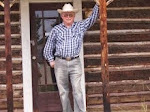
David Grant Noble.

I recently ran into an old friend again after about 35 years in the fourth edition of David Grant Noble's book Ancient Ruins an Rock Art of the Southwest. I call it an old friend because the first edition was published in 1980, which was shortly after the time when I became interested in rock art, and when there were not that many books available with information about rock art sites. Noble's first edition was a breath of fresh air and a valuable go-to guide, and his fourth edition is even better. 

This is most certainly not a text book, yet it has a wealth of good information about not only specific sites, but also about the cultures to which they are attributed. Organized by cultures and cultural regions in the American Southwest, each entry also concludes with a "suggested reading" entry pointing the reader to sources of more and deeper detail.  In this sense it makes an excellent introduction to the cultures of the American Southwest and their study.


Navajo, Crow Canyon,
Dinetah, p. 250.

It is a sort of a guide book, but it is much, much more. Some of my favorite facts are that the tiny settlement of Thompson, Utah, on the way to the great Sego Canyon rock art site has an old, closed diner that served as a location in the popular 1991 movie Thelma and Louise (p. 17), and that squabbles over whether or not a road was going to be built that would impact the Mule Canyon archaeological ruins in Utah served as the inspiration for Edward Abbey's novel The Monkey Wrench Gang (p. 110).

Noble moved  to New Mexico in 1971, where he was the photographer on the School for Advanced Research's (SAR) archaeological excavations at Arroyo Hondo Pueblo, a 14th-century site near Santa Fe. He remained on the SAR staff until 1989. He has long studied the Southwest's deep history and archaeology and traveled widely to photograph ruins, rock art, and landscape.


Navajo pueblito, Largo-
Gobernador region, p. 251.

As an accomplished photographer he has provided most of the beautiful photos that illustrate this volume, and he has successfully conveyed his love of the subject in both the pictures and the text.

Five stars, a wonderful read.

With detailed information about over 100 sites, and with a 15 page index, this volume is certainly reader friendly. Beginners will find it a great introduction to the ruins and rock art of the American Southwest. Even professional archaeologists will find it enjoyable reading for its comprehensive background and for the human level in which it expresses this subject. The rest of us will enjoy it as a entertaining read. It is always a pleasure to run in to an old friend again, and an even more pleasant surprise to discover how much they have improved with age. Such is the case with Ancient Ruins and Rock Art of the Southwest, by David Grant Williams, and I look forward to seeing more from him in the future.

Ancient Ruins and Rock Art of the Southwest: An Archaeological Guide, Fourth Edition. David Grant Noble. Taylor Trade Publishing an imprint of Rowman & Littlefield, Lanham, Maryland, 2015. xxi + 296 pp., figures, references, index. ISBN 978-1-58979-937-0 $19.95 (paper), ISBN 978-1-58979-7 $9.99 (eBook).

Saturday, April 16, 2016

CUB CREEK - ORIGINALITY, OR WHIMSY, OR BOTH:


Post-classic Vernal Abstract figures, Cub
Creek, Dinosaur National Monument, Utah.
Photograph Peter Faris, June 1984. 

In the collection of Cub Creek anthropomorphic figures from the Uintah Fremont people of Dinosaur National Monument in Utah, there is a sequence of figures undergoing varying stages of successive abstraction from Representative Realism to a highly abstracted stage. Included in these figures are a few with a visual treatment that I have wondered at since I first saw them about 30-some years ago. While most of the abstracted figures at Cub Creek use basic line or dot patterns to indicate the details of jewelry and torso/clothing, these figures use other symbols for that purpose.
                                                             

Cub Creek figure, Dinosaur National
Monument, Utah. (Faris 1987:34)
                                
As a starting point, this illustration shows the basic method of indicating a simplified figure at this site. Dots are used as facial details and jewelry (necklaces, ear bobs) and large pectoral pendants are portrayed. Body details are either composed of linear markings or lines of dots, and once the viewer is aware of the pattern it is easy to find a large number of these figures at Cub Creek which fall into the pattern although they all have individual differences.


Cub Creek, Dinosaur National Monument,
Utah. Photograph Peter Faris, 1984.

There are a few, however, which have details that differ noticeably from the expected pattern. A couple of them are illustrated here where one figure has torso details indicated with a couple of rows of connected triangles with the points up. There are four triangles across the upper part of the torso or chest area, and a pair of triangles in approximately the location of the waist.


Cub Creek figures, Dinosaur National
Monument, Utah. (Faris 1987:36)

Next to that figure is another one with the design located in the torso of two simple interlocked spirals, sort of a variation on the Na'kwach (brotherhood) symbol illustrated by Frank Waters in his Book Of The Hopi (1963:63). Waters claimed that it represents priests clasping hands in that manner during the dances of the Wuwuchim ceremony.


Cub Creek, Dinosaur National Monument,
Utah. Photograph Peter Faris, 1984.

To me, however, the one that is most interesting is a figure, also from Cub Creek, which has a torso and shoulders consisting of pretty much what I would expect a drawing of a Greek column and capitol of the Ionic order would be. 


Ionic column capitol, Wikipedia.

Note also that the line above the facial area is painted with a dark red ochre, and there seem to be visible traces of paint in other spots as well.


Cub Creek figure, Dinosaur National
Monument, Utah. (Faris 1987:35)

Now were these done in a joyful exploration into the possibilities of depicting the visual image in original and creative ways (i.e. artistic variation), or were they done with a sense of humor, illustrating the human image with a whimsical purpose and style, or are they accurate records of details of clothing and adornment that were themselves unique and creative? I do not know, but whichever is the case I very much like the implications for the mindset of the prehistoric Fremont artist(s) who created these images. It allows me to see them with an increased sense of common humanity, and I very much like what I see.


REFERENCE:

Faris, Peter
1987    Post-Classic Vernal Abstraction: The Evolution of a Unique Style in Late Fremont Rock Art in Dinosaur National Monument, Utah, pages 28-40, Southwestern Lore, Vol. 53, No. 1, Colorado Archaeological Society. 

Waters, Frank
1963    Book of the Hopi, Ballantine Books, New York.

Wikipedia

Saturday, April 9, 2016

STYLISTIC EVOLUTION - FROM REALISM TO ABSTRACTION IN FREMONT ANTHROPOMORPHS - PART 2:


FIGURE 3, 3-Princesses, Cub Creek, 
Dinosaur Nat. Mon., Uintah County, UT.
Photograph Peter Faris, September 1989.

In my first column on this site, (March 26, 2015) I suggested that the next stage in this process could be seen in the 3-Princesses, a group of figures from near the Cub Creek site (FIGURES 3, 3A, 3B, FIGURE 4, and FIGURE 5). They have been simplified another step by losing their extremities although they still possess their decorative adornment. The first princess even wears facial markings that may represent face paint.


Figure 6A, Cub Creek, Dinosaur National 
Monument, Utah. Photograph Peter Faris,
June 1984.

Figure 6B, Cub Creek, Dinosaur National
Monument, Utah. Peter Faris, 1984,
page 32.


From this point on even the torso of the figure has disappeared, and we see figures that are represented by their jewelry and costume with a few facial features thrown in. FIGURE 6A is still roughly on par with the first princess for amount of detail. FIGURE 6A shows a hairdo or headdress, facial features, wears a pectoral and possible earbobs, and a kilt is seen where the bottom of the torso should fall. This figure also wears a belt line which will be seen as well as subsequent figures (an ink drawing of this figure is seen as FIGURE 6B).


Figure 7, Cub Creek, Dinosaur National
Monument, Peter Faris, 1987, page 34.

Figure 7 lacks the body outline, but the torso is composed of dots, it still has the pectoral, facial features, and ear bobs, as well as a necklace and headdress.
                                                                                                                                 
Figure 8, Cub Creek, Dinosaur National
Monument, Peter Faris, 1987, page 33.

Figure 8 also lacks the body outline. The torso is composed of six rows of dots, it still has the pectoral, facial features, and ear bobs, as well as a necklace, headdress, and belt. The emphasis on these figures is less the details of the human body being portrayed than it is on the items of decorative adornment. In a culture in which all of these items are handmade, and thus unique, such a focus on details of adornment seem to me to betray a concern for the identity of who wore these particular items, in other words it functions as a portrait.


Figure 9, Cub Creek, Dinosaur National
Monument, Utah. Photograph
John Faris, 1989.


Figure 10, Cub Creek, Dinosaur National
Monument, Peter Faris, 1987, page 38.

Figures 9 and 10 show another step in simplification with the presence of the torso almost ignored, its existence is implied by the positions of the pectoral, shirt or vest front seam, and the belt line. Facial details and ear bobs are also still found, but this figure, with such a degree  of simplification, is hard to label as realism.


Figure 11, Cub Creek, Dinosaur National Monument,
Utah. Photograph Peter Faris, 1984.

Figure 12, Cub Creek, Dinosaur National
Monument, Peter Faris, 1987, page 39.

These steps in the sequence have further eliminated details until at the end of the whole sequence we have the trio of figures in FIGURES 11 and 12 which would never be recognizable as portrayals of humans if we had not had the rest of the sequence to follow step by step. At this point in the whole history I tend to see that last Fremont artist at Cub Creek put down his hammer stone and step back, then turn and walk away (hopelessly romantic, I admit it).

Perhaps the figures were originally more complete than now, with elements and detailed added by paint, and, given that the great figure from the 3-Kings panel, with which I started my sequence, was both painted and pecked, this is a definite possibility. During my visits there however, I could see no trace of paint remaining on any of the Cub Creek anthropomorphs. Even had they been painted, the changes that we see in the remaining petroglyph elements indicate that the style of humanoid representation was changing, so the possibility of paint does not invalidate my conclusions. However we assume it played out, it is still the visual record of a remarkable cultural transition, from Classic Vernal Style, through Post-Classic Vernal Abstraction, to whatever came next, which before long, were the Ute/Shoshone peoples of the same area.

In 1987, I concluded my study of these images with the following paragraph:
"At this location, sometime around ca. A.D. 1200, the last inheritor of the artistic tradition of creative abstraction left the trio of figures carved into the cliff at Cub Creek. We probably can never know whether his or her people migrated out of the area or stayed in the area maintaining the hunter/gatherer lifestyle but having reached a point of deculturation that the continued  creation of these abstracted figures was no longer relevant to their way of life and their beliefs. Whichever the case, it was the end of a unique art form, a style based on simplification and abstraction but, most of all, on creative variation in anthropomorphic figure portrayal." (Faris 1987:40)


REFERENCE:

Faris, Peter
1987    Post-Classic Vernal Abstraction: The Evolution of a Unique Style in Late Fremont Rock Art in Dinosaur National Monument, Utah, pages 28-40, Southwestern Lore, Vol. 53, No. 1, Colorado Archaeological Society.

Schaafsma, Polly
1980    Indian Rock Art of the Southwest, School of American Research, Santa Fe, and University of New Mexico Press, Albuquerque.

Friday, April 1, 2016

ROCK ART PROOF THAT THE CREATURES IN THE TREMORS MOVIES WERE REAL?


La Cieneguilla, Southwest of airport,
Santa Fe, NM. Photograph Patricia
Price, December 1991.


La Cieneguilla, Southwest of airport,
Santa Fe, NM. Photograph Patricia
Price, December 1991.


The series of Tremors movies was memorable for a number of reasons; fun and frightening, with parodies of so many types of people that we all know. I was, however, quite surprised to find that the creatures upon which the movie were based are apparently real rare, but real. I am referring, of course, to the Graboids, the ravening, monstrous, carnivorous worms, and their other incarnations, the Shriekers, and the Ass Blasters.

Shrieker from the Internet,
by teratophoneus-d7rlcz5,
http://deviantart.net


Now I am not suggesting that I know where we can run off to and observe the real thing. There is, however, a petroglyph panel at La Cieneguilla, south of Santa Fe, New Mexico, that convincingly portrays Shriekers. The movie Tremors, was supposedly filmed in California, and was fictional from beginning to end. These petroglyphs add an interesting possibility. Conspiracy theorists should be able to see how the selling of this movie as fiction is a very clever government plot to convince people that the real creatures actually do exist (or do not exist, it depends upon your conspiracy).  The Ancestral Puebloan people of the area obviously knew of them, and knew them well enough to leave pictures on the rocks. This brings up the obvious question then; is it possible that we can hope someday to find evidence of the Graboids as well? Well, quite possibly on next April Fool's Day. 

Saturday, March 26, 2016

STYLISTIC EVOLUTION - FROM REALISM TO ABSTRACTION IN FREMONT ANTHROPOMORPHS - PART 1:


Figure 1. 3-Kings Panel, Classic
Vernal Fremont Style, McConkey
Ranch, Utah. Photograph Peter Faris,
September 1994.

The subject of Style in rock art has perhaps engendered more arguments than any other facet of this field of study. So many people throw the word style around loosely without actually understanding the definition of that word. In art studies, style is that suite of defining characteristics which encompass a group of related works, and separate it from another group. For instance, Impressionism, as compared to Classicism. But when we look at Impressionist works by a number of different artists we see a broad range of appearances between them, so where does style come in? The term Style actually applies more to the intentions of the artist than it does to the end result of that artist's creation, but, to the general public, the term becomes applied to what they see in common from one work to another. That is the basic meaning of the term Style as it is generally applied in rock art studies.

The rock art in the example of Stylistic Evolution that I am presenting here began as Fremont Classic Vernal Style figurative imagery as defined by Polly Schaafsma (1980), and evolved or morphed into what I have called Post-Classic Vernal Abstraction (Faris 1987:29). Starting with highly naturalistic examples, why would imagery devolve into increasing abstract forms over time. My answer is that we have numerous examples from the history of art in which exactly that has occurred, and I suspect a psychological effect like "Mere Exposure" is behind it. The basic premise is that people get used to what they see most often as the way something should be seen - as the "right way" to portray it.

“THE MORE YOU SEE IT THE MORE YOU LIKE IT, (Familiarity) Robert Zajonc (1923-2008) –
Zajonc’s groundbreaking paper, Attitudinal Effects of Mere Exposure, was published in The Journal of Personality and Social Psychology in 1968. Zajonc’s paper describes a series of experiments in which he showed participants a sequence of random images – geometric shapes, Chinese symbols, paintings, and pictures of faces – that were flashed in from of them so rapidly that they were unable to discern which were shown repeatedly. When subjects were later asked which images they preferred, they consistently chose the ones to which they had been most frequently exposed, although they were not consciously aware of the fact. What Zajonc seemed to have discovered was that familiarity brings about an attitude change, breeding affection or some form of preference for the familiar stimulus. This increases with exposure: the greater your number of exposures to something, the more affection you will feel toward it. To put it simply, 'the more you see it, the more you like it.'” (Collin, et al 2012:233)

How would that also lead to the evolution (or perhaps devolution) from realistic to abstracted images? Well, along with the Mere Exposure effect we humans tend to overlook details, so as we are viewing these images we are also making subconscious decisions as to which parts of it are more important than others, and in the future the less important portions of the image can get overlooked, while the elements we consider to be of greater importance will remain and perhaps become emphasized.

The Classic Vernal Style of Polly Schaafsma includes figures with attention to realistic details of texture, contour, and accessories, the best example of which is the main figure from the 3-Kings panel at McConkey Ranch, North of Vernal, Utah (FIGURE 1). This ultimate expression of Classic Vernal Style shows anatomic details, clothing and accessory details, and was created in multi-media, painted as well as pecked. Other figures from this stylistic classification are less grand and ornate, but most seem to share this intention toward realism.

This is exactly what I saw in the progression of images from Cub Creek, Dinosaur National Monument, Utah, a step by step simplification and abstraction from the Classic Vernal Realism starting point to a final set of petroglyphs that would not be identified as anthropomorphs if we did not have the intervening steps to refer to.

Figure 2. Classic Vernal Fremont
Style, McConkey Ranch, Utah. 
Peter Faris, 1987.

From the Classic Vernal Style beginning we see a first step in the evolution of the figure is essentially a simplification. Details of adornment, headdress, jewelry (pectorals, ear bobs), clothing, etc., are still present but the figure itself is not realistically proportioned, it reminds one of a cookie cutter gingerbread man. This example (FIGURE 2), also from McConkey Ranch in the Dry Fork Valley, near Vernal, Utah, is obviously related to the 3-Kings panel, but not as naturalistically detailed. In effect, the interest is more in the decorative detail than in the realism of the figure. This focus on decorative detail will be seen to be a constant throughout the sequence.


Figure 3. Three-Princesses panel at Cub
Creek, Dinosaur National Monument,
Utah. Photograph Peter Faris,
Sept. 1989.


Figure 3A. Close-up of first princess
at Cub Creek, Dinosaur National
Monument, Utah. Photograph
Peter Faris, Sept. 1989.


Figure 3B. Close-up of second and
third princesses at Cub Creek,
Dinosaur National Monument, Utah.
Photograph Peter Faris, Sept. 1989.

As I envisioned it back in 1987, the 3-Kings panel was most likely created during a cultural peak of the local Fremont culture, after which the culture slowly changed (or declined), and the rock art changed with it. I illustrate this with a sequence of anthropomorphs from the great cliff face site of Cub Creek in Dinosaur National Monument. From the Classic Vernal Style beginning, the first step in the evolution of the figure is essentially a simplification. I illustrate this with figures from very near the Cub Creek cliff face known as the 3-Princesses. the figures now are merely symbolic shapes instead of realistically proportioned torsos, or even the cookie cutter figure. FIGURES 3, 3A, and 3B show the 3-princesses panel complete and then close up, and FIGURES 4 and 5 are drawings of these figures.
Figure 4. First princess at Cub Creek,
Dinosaur National Monument, Utah.
Peter Faris, 1987, page 32.

Figure 5. Second and third princesses
at Cub Creek, Dinosaur National
Monument, Utah. Peter Faris,
1987, page 31.

These figures are stylistically related to the Cub Creek panels and the location is certainly close enough to be considered as the same location, and as they are all in the same basic location they were likely to have been created by one group of people (the local residents) over time, and thus their changes illustrate perfectly the evolution that I have discussed above.

This sequence will wait for part 2 of this essay. 


REFERENCE:

Collin, Catherine, Nigel Benson, Joannah Ginsburg, Voula Grand, Merrin Lazyan, and Marcus Weeks,
2012    The Psychology Book, DK Books, London and New York.

Faris, Peter
1987    Post-Classic Vernal Abstraction: The Evolution of a Unique Style in Late Fremont Rock Art in Dinosaur National Monument, Utah, pages 28-40, Southwestern Lore, Vol. 53, No. 1, Colorado Archaeological Society.

Schaafsma, Polly
1980    Indian Rock Art of the Southwest, School of American Research, Santa Fe, and University of New Mexico Press, Albuquerque.

Saturday, March 19, 2016

BOOK REVIEW: UNDESTANDING MEANING AND PURPOSE OF ROCK ART:

UNDESTANDING MEANING AND PURPOSE OF ROCK ART, by D. Russel Micnhimer, 2012, Pendulum Press.

Cover Photo.

I recently received a copy of a very interesting book, Understanding Meaning And Purpose Of Rock Art, by D. Russel Micnhimer. To begin with it is very unlike almost any other rock art book I have ever read. Unlike most, which are crammed full of the most interesting photographs of rock art the author can find, this volume has just a few, black and white, rock art photos which have no captions. They are not identified as to site, location, style, or even subject.
Five Stars for thoughtfulness.

As I read this remarkable volume I began to get the feeling that I was perusing an exhaustive concordance of rock art studies. Now don't get me wrong, this book does not begin to fit the actual meaning of a concordance which is, in effect, a word-by-word index of the subject, generally the bible (look at a copy of Strong's Exhaustive Concordance to see what I mean). What gave me that feeling was the encyclopedic completeness with which Micnhimer approaches his subject. He not only touches on every aspect of his subject, the understanding of meaning and purpose of rock art, he gives numerous aspects that most of us never thought of before. And unlike so many one-size-fits-all theories about rock art, he approaches it with the unique premise that we should think about it.

It was a little long on its discussion of "altered states of consciousness" for my taste, but that does fit in with his premise that all possibilities should be considered. To my great joy, I only noticed the "S" word (shaman) twice, so that kind of balances out. Indeed, he mentioned a couple of possibilities that I had not really considered before. For many years I have consistently rejected the proposition that some rock art consists of what we class as maps. Along with this I have been hugely skeptical of the concept of rock art marking the location of important sites and resources (I will not go into all that here). I was surprised, however, to find a couple of other possibilities that I had not considered. One was that the marking located at the resource or site could represent an ownership mark, and the other is that a petroglyph could serve "as a tool to focus group unity and common values." It may have "instilled a sense of belonging to the group of those who understood the symbols, served as a reassurance of group knowledge about periodic insecurities such as drought or eclipses or insured that necessary tasks were undertaken that would insure the survival of the group." (p.36)

Because Micnhimer does present all the possibilities I can guarantee that you will read some you disagree with, but he does not say he agrees with them either. His whole premise is that we must consider all the possibilities before accepting, or rejecting, an answer.

I can only say that I wish that we could require all those who have been beguiled by fraudulent gurus like Barry Fell, Scott Wolter, and LeVan Martineau to read this book. It seems to me that it is appropriate to end in Micnhimer's own words of conclusion. "We can realize as this discussion concludes, that understanding the meanings and purposes of rock art is a complex one. Many factors and facets of the task must be recognized and combined if we are to arrive at satisfactory results. Once we have learned to ask the appropriate questions, we can begin to populate our understanding with the appropriate answers and hope that by doing so we can be closer to actually knowing the intent of the original makers of these marks on stone that we know as rock art. To the extent this book facilitates that, my marks here will have succeeded." (p. 143)

To get a copy for yourself:

Micnhimer, D. Russel,
2012    Understanding Meaning and Purpose of Rock Art, Pendulum Press.

$14.95 plus $4.00 shipping and handling, to:
Russel Micnhimer
P.O. Box 1653
Prineville, OR  97754

Saturday, March 12, 2016

MAPS IN ROCK ART - REVISITED:


"Map Rock", Turkey Creek, Fort
Carson, Colorado. Photograph:
Peter Faris, July 2005.

On April 18, 2009, I posted a column titled "ARE THERE MAPS IN NATIVE AMERICAN ROCK ART?" In this column I presented a so-called map panel petroglyph from southeastern Colorado and explained my belief that it could not represent a map as we define the term.

A fairly simple illustration of this question is found at the so-called "Map Rock" at Turkey Creek, Fort Carson, Colorado, pictured above. The most common explanation of any so-called map  rocks is that they picture the landscape around the site. The lines are matched up to water courses or valley bottoms for explanation. 


Petroglyph lines traced over
photograph of "Map Rock",
Turkey Creek, Fort Carson,
Colorado.

As you can see I have done this for the Turkey Creek map rock. The first step was to trace the lines on the rock. 


Map of Fort Carson, Colorado. The
Turkey Creek area is in the bottom
left quadrant.


Tracing of the watercourses on
the Fort Carson map.

Then I traced the streams and waterways on a map of the Turkey Creek area at Fort Carson. It is a relatively simple step then to compare the tracings for commonalities that would identify the petroglyph as a map. "But what about scale" you say? I think we can see that there is no grouping of lines on the map tracing that matches the petroglyph at any scale.

"Ah, but what if it is a map of trails, not streams?" There I have to fall back on my previous explanations. I do not believe that Native Americans ever created what we identify as a map to record trails. First, you do not need a map to follow most trails, you can see them clearly there on the ground, and this map is not going to fit into your pocket anyway. Then the map proponents declare that it is a "secret trail" that will take the people to safety in a time of war. Some secret! If that were the case their secret is posted on the equivalent of a billboard for their enemy to find and follow.


Lean Wolf's ledger book drawing
of his horse raid. From Warhus,
1997.

About the closest I can come to acknowledging a map in Native American art would be an example from ledger art that shows a figure traveling a route for a horse raid (Warhus 1997). That is the map drawn by Lean Wolf, 1881, recording, and advertising, his heroism, but that is not intended to accurately portray the geographic details of the route, it is intended to be a record of Lean Wolf's deeds and actions, his personal history. This was also drawn during the period when Anglo culture was changing the native practices, and so is strongly influenced by American culture.

So, in the end, I fear I have to stick with my opinion that there just are no maps in rock art. If you believe otherwise please send me the evidence.

REFERENCES:

Faris, Peter
http://rockartblog.blogspot.com/2009/04/are-there-maps-in-native-american-rock.html

Warhus, Mark 
1997    Another America: Native American Maps and the History of Our Land, St. Martins Press, New York.