Saturday, August 22, 2015

ATMOSPHERIC OPTICS, THE ZIA SUN SYMBOL, AND THE FOUR POINTED STAR:


Painted cave, Bandeliere National
Monument, New Mexico. Zia sun
symbol in center. Photograph 
Russ Finley.


Zia sun symbol, public domain.


On the night of the 4th of July, 2015, while watching the bursting fireworks in town, I realized that the bright points of light falling from exploding mortar shells and rockets were picked up visually as small four-pointed crosses. Whether from the smoke in the atmosphere, or humidity, or other atmospheric optical phenomenon, they all were showing visually as small, bright, colorful crosses. It occurred to me that the reason the so-called "Zia Sun Symbol' only presents solar rays on the four quadrants may indeed be based upon such an atmospheric optical phenomenon.

Petroglyph Park, Albuquerque, New Mexico. Photograph by Julia Grundmeyer.


Petroglyph Park, Albuquerque, NM.
Photograph Peter Faris, Sept. 1988.

Equally likely is that this may be the origin of the four pointed star use by Native Americans, and the outlined cross (also 4 arms) which is often interpreted to represent the planet Venus. 


Outlined cross symbol. Johnson Canyon,
Ute Mountain Ute Reservation, Colorado.
Photograph Peter Faris 1993.

The viewing of heavenly and/or atmospheric phenomena under conditions that distorted the image to that of a four-armed cross might well have been picked up and applied across the whole spectrum as we see it today. Can I prove any of this? No, I cannot, but it is worth thinking about.

Saturday, August 15, 2015

WIND SYMBOLS IN ROCK ART OF CHACO CANYON:


Chaco Canyon, New Mexico.
Photograph Peter Faris, August 1984.


Double Scroll from Fajada Butte, Chaco
Canyon, New Mexico. Sofaer, Anna P.,
and Rolf M. Sinclair, 2008, Astronomical
Markings at Three Sites on Fajada Butte,
pp. 669 – 692, in Foundations of New
World Cultural Astronomy.

On Saturday, December 6, 2014, I posted a column entitled Speech Scrolls in Rock Art? In this posting I drew  a parallel between the Mesoamerican symbol for a speech scroll with a rock art panel in Chaco Canyon. This is really only part of the possibility however. In the same way as I postulated the possibility of Mesoamerican speech scrolls in the rock art of North America, I would now like to point out the similarity to Mesoamerican wind symbols.

“Cloud scroll with raindrops (detail of
recently discovered monument at
Chalcatzingo).”  Taube, Fig. 75, p. 107.

The fact is that Mesoamerican peoples saw a similarity between the breath coming out of the mouth in speech, and wind, and they symbolically related these by using similar signs to indicate wind and breath, and the symbols in Chaco Canyon thus can be viewed as possible speech symbols, or possibly as the wind. Just look at the remarkable similarities between the symbols in Chaco Canyon and the examples of wind symbols from Karl Taube's chapter "The Breath of Life, in The Road to Aztlan," by Fields and Zamudio-Taylor.


Wind from a cave, Chalcatzingo,
Mexico, ca. 1000 B.C. Pasztory,
Pre-Columbian Art, 1998.

In this instance, as in previous examples of such similarities I point out that we have long known of and accepted influences from the Mesoamerican civilizations in early peoples of the American southwest. This influence is assumed to have been asserted by pochteca. "Pochteca (singular pochtecatl) were professional, long-distance traveling merchants in the Aztec Empire. They were a small, but important class as they not only facilitated commerce, but also communicated vital information across the empire and beyond its borders." (Wikipedia)

Evidence of this is seen in Mesoamerican goods and products in southwestern America as well as in the supposed Mesoamerican ideas found among cultures here. Images interpreted as Mesoamerican deities such as Quetzalcoatl and Tlaloc have long been accepted on southwestern American rock art, and physical objects such as macaws and cast metal bells have been found in archaeological excavations in the American southwest, including Chaco Canyon.

Duck-billed wind god. Taube,
The Road To Aztlan, Fig. 97, p. 112.


Pawik kachina, Hopi Pawik or
Duck Kachina doll by artist Woody
Sewemaenewa. www.silvertribe.com.

The Aztec wind got was a duck-billed deity named Ehecatl. It is perhaps no coincidence that Pawik kachina of the Hopi is the duck kachina who is prayed to for wind and rain. Additionally, the kachinas travel to and from their homes in the San Francisco peaks in the form of ducks.

Early rock art researcher Campbell Grant went so far as to associate the duck-headed figures found in ancestral Puebloan rock art with Ehecatl and Pawik. While I am not in a position to refute that, I am not willing to go that far in this discussion. I do, however, find an intriguing similarity between the figures from Chaco Canyon and the wind symbols of Mesoamerican cultures, and believe that a case might be made for such an influence.


REFERENCE:


Pasztory, Esther
1998    Pre-Columbian Art, Cambridge University Press, Cambridge. 

Sofaer, Anna P., and Rolf M. Sinclair
2008    Astronomical Markings at Three Sites on Fajada Butte, pp. 669 – 692, in Foundations of New World Cultural Astronomy, edited by Anthony Aveni, University Press of Colorado, Boulder.

Taube, Karl,
2001    The Breath of Life: the Symbolism of Wind in Mesoamerica and the American Southwest, pages 102 – 123, The Road To Aztlan: Art From A Mythic Homeland, edited by Fields, Virginia M., and Victor Zamudio-Taylor, Los Angeles County Museum of Art, Los Angeles.


Wikipedia

Saturday, August 8, 2015

AN ILLUSTRATION OF RADIATION POISONING IN KAKADU ROCK ART - UBIRR:


Ubirr, Kakadu, Australia. Aug. 22, 2011,
public domain, patienttalk.org-2.

On July 28, 2015, PBS aired a documentary titled "Uranium - Twisting the Dragon's Tail." This documentary, dated 2015, presented Dr. Derek Muller as the very accomplished narrator discussing the discovery and original uses of uranium.

“We are who we are because of uranium,” Muller says. “It unlocks the secrets of the universe and reveals the nature of reality. It’s both a dream of clean limitless power and a nightmare of a silent, poisoned Earth.”  (pbs.org)

During the latter part of the program, while discussing radiation poisoning, Muller showed the accompanying Australian pictograph with the astonishing claim that it represents a human suffering from radiation poisoning. Supposedly this person is showing joint swelling, and possibly tumors, caused by radiation poisoning.  He stated that this image from the Ubirr rock art site in Kakadu, Australia, was painted as warning for people not to disturb the rocks in that area which he identified as naturally rich in uranium ores. Now this is an absolutely astonishing claim, and one that has absolutely no evidence to back it up. The discovery and diagnosis of radiation poisoning by modern medicine was a process that came at the end of a chain of events beginning with Marie Curie's remarkable discoveries, and ending with the public health disasters of tens of thousands of Japanese citizens suffering from mysterious symptoms following the bombing of Hiroshima and Nagasaki ending World War Two. In lieu of evidence suggesting that ancient aboriginal Australians had gone through some similar developmental process and chain of events leading to a similar diagnosis, I must remain skeptical.

"URANIUM – TWISTING THE DRAGON’S TAIL is written and directed by Wain Fimeri and developed and produced with support from SBS Australia, Film Victoria and Screen Australia. A Genepool production for PBS. Bill Gardner, Vice President, Programming & Development, oversees the project for PBS." (pbs.org)

All-in-all, an interesting program with an entertaining host who really should stick to nuclear science and stay away from analyzing the meaning of rock art panels.

REFERENCES:

http://patienttalk.org/wp-content/uploads/2013/11/2011-08-22_Ubirr-Kakadu-NT-Australia_5838_edited-1.jpg


http://www.pbs.org/about/news/archive/2015/bomb-and-uranium/


Saturday, August 1, 2015

BIRDS IN ROCK ART - GREAT BLUE HERON:


Rabbit Valley, McDonald Creek, Mesa County,
Colorado. Photograph Peter Faris, 1981.

The painted bird in this panel is found in Rabbit Valley, the McDonald Creek drainage, in western Colorado, and is attributed to the Fremont Culture. I first visited it and took photographs in 1981. From the size and confirmation of the beak I have always thought of this bird as a great blue heron, although there are other possible identifications of it as well.


Great blue heron, public domain.

In his book, Odyssey of the Pueblo Indians, William M. Eaton, designated it a Puebloan calendar, based upon the numbers and patterns of dots on the chest of the bird as seen below.

Eaton, William M., 1999, Odyssey of
the Pueblo Indians, Turner Publishing
Co., Paducah, KY., p. 150.

"It is a calendar that utilizes dot patterns for a year (of 12 or 13 months) and is based upon a 28 day lunar month. The total of days (13 x 28) produces a year of 364 days. The 28 dots in the lower box represent days and were entered by working downward and to the right. The last row of dots shows the artist in the process of rechecking his dot count. Then a new and final dot was entered in the right edge of the box which indicated 12 vs. the desired 13 calendar months. But why not show 13 months. the answer is that this would have violated ceremonial rules of "duality," and would be" bad luck"." (Eaton 1999: 150)

Well, Mr. Eaton does have the correct count of the numbers of dots. I cannot, however, follow the reasoning that says it has to have 13 dots for months, but stopped with 12 because 13 would be bad luck. It seems to me that fear of 13 (triskadekaphobia) is pretty much a European/Christian.

According to Wikipedia:
"Triskadekaphobia (from Greek tris meaning "3", kai meaning "and", deka meaning "10" and phobos meaning "fear" or "morbid fear") is fear of the number 13 and avoidance to use it; it is a superstition and related to the specific fear of the 13th person at the Last Supper being Judas, who betrayed Jesus Christ and ultimately hanged himself." (Wikipedia)

Now, I admit that there is still a lot to learn about the Fremont Indian culture, but I am willing to predict that they were not Christians of European descent. The Fremont culture was a pre-Columbian culture found in eastern Utah and northwestern Colorado from roughly AD 1 to AD 1300, and not Puebloan. "It was adjacent to, roughly contemporaneous with, but distinctly different from the Anasazi culture." (Wikipedia) 

Note, the real panel has a great deal of other imagery on it that Eaton had to ignore. One other interpretation that he wrongly made is his portrayal of the star chart over the left shoulder (our left, not the bird's) of the heron. In the photograph of the panel this can be seen as a feathered plume which is actually attached to the bird.

So here is my argument with Eaton, he includes the Fremont Culture as a Puebloan group which they were not according to all references. And then he bases his analysis and interpretation upon a European Christian superstition which the Fremont people most assuredly did not share. So while I have no doubt that Mr. Eaton was sincere in his studies, and he certainly had a great deal of fun in the belief that he was making important contributions to the subject of rock art studies, his efforts have mainly contributed to the kind of sloppy interpretation that makes serious students of rock art cringe. Sorry Mr.  Eaton, nice try but no cigar.

REFERENCES:

Eaton, William M.
1999    Odyssey of the Pueblo Indians, Turner Publishing Co., Paducah, KY.


Wikipedia
Saturday, July 25, 2015

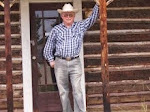
CONGRESSIONAL HOUSE CHAIRMAN BISHOP CALLS NATIVE AMERICAN ARTIFACTS "BULL CRAP - NOT AN ANTIQUITY"


 Rock art at Basin and Range Nat. Monument.
Photograph from www.protectbasinandrange.org.


 Rock art at Basin and Range Nat. Monument.
Photograph from www.protectbasinandrange.org.


 Rock art at Basin and Range Nat. Monument.
Photograph from www.protectbasinandrange.org.

The examples of rock art shown here, and many, many more, were called "Bull Crap" by House Natural Resources Committee Chair Rob Bishop, who represents Utah's first Congressional District.


Rep. Rob Bishop, 1st.
Congressional District, Utah.

Reported by the staff of Native News Network on July 13, 2015, the story reads:

WASHINGTON - House Natural Resources Committee Chair Rob Bishop, dismissed the historical value of Native American artifacts as a basis for establishing national monuments last Friday (July 10, 2015), as first reported by Greenwire in a story about President Obama's designation of three new national monuments:

"There is nothing that Obama did today that had anything to do with antiquity," Bishop said. "There are criteria for using the act. There is nothing Obama announced that had anything to do with the criteria."


Utah's First Congressional
District. Wikipedia.

When he was asked about the Native American artifacts at the Basin and Range National Monument site in Nevada, including cave paintings, he said, "ah, bull crap. That's not an antiquity."

Ranking committee member Raul M. Grijalva released the following statement in response.

"The natural and cultural resources protected by these designations are, in fact, antiques; species and trees and rocks and cave paintings and beautiful landscapes are all quite old. We want them to remain antique, House Republicans want them to become extinct."

"Grijalva thanked and congratulated President Obama earlier today for his designations of Berryessa Snow Mountain National Monument in California, Waco National Monument in Texas, and Basin and Range National Monument in Nevada."

When we are faced with such staggering ignorance and insensitivity what can we do but keep trying to preserve the beauty and knowledge. Don't give up the cause. Perhaps we who feel strongly about the cause of protecting rock art should consider boycotting all businesses in Utah's First Congressional District in protest, but that would also hurt the many innocent citizens and voters there who value preservation and rock art, like all the great members of the Utah Rock Art Research Association. I hope that they will express their disapproval of Rep. Bishop's statements and opinions, perhaps at the ballot box?


REFERENCES:

https://www.facebook.com/nativenewsnetwork


https://www.protectbasinandrange.org

Wikipedia.

Saturday, July 18, 2015

MILK PAINT IN MIDDLE STONE AGE - SOUTH AFRICA:

The question of tools and materials used to create rock art has received another fascinating contribution with the discovery of a small piece of flat rock with a red ocher pigment on it from a rock shelter in northern KwaZuluNatal province in South Africa that had been occupied by humans during the Middle Stone Age, from roughly 77,000 to 38,000 years ago. An analysis of it found casein, a protein from milk, mixed with the pigment. Casein has long been used as a binder in paint, and the milk itself would provide the liquid vehicle to mix the paint in. Indeed milk paint is a category of do-it-yourself paint that has a long history and it is still sometimes used to give furnishings an antique look. Casein is also a popular binder in glues, being an important component in many white carpenter's glues. A report in the online science journal PLOS/one, and picked up by Smithsonian.com, reported the discovery and analysis recently.


Stone flake with milk paint, Sibudu, South Africa.
University of Colorado Museum, Boulder, Colorado.

"The researchers, led by Paolo Villa, a curator at the University of Colorado Museum of Natural History, first found casein, a protein found in milk, in a smear of reddish paint on the edge of a stone. The milk would have helped the powder of ochre bind together into a paste that people may have used to paint stone, wood or their bodies. The researchers figured that the mixture was paint, rather than adhesive because milk doesn’t stick that strongly unless the proteins are mixed with lime and heated." (Fessenden 2015:1)

"Gas chromatography/mass spectrometry, proteomic and scanning electron microscopy with energy-dispersive X-ray spectroscopy (SEM/EDS) analyses of residue on a stone flake from a 49,000 year-old layer of Sibudu (South Africa) indicate a mixture of ochre and casein from milk, likely obtained by killing a lactating wild bovid. Ochre powder production and use are documented in Middle Stone Age South African sites but until now there has been no evidence of the use of milk as a binder. Our analyses show that this ochre-based mixture was neither a hafting adhesive nor a residue left after treating animal skins, but a liquid mixture consisting of a powdered pigment mixed with milk; in other words, a paint medium that could have been applied to a surface or to human skin. The significance of our finds also lies in the fact that it establishes the antiquity of the use of milk as a binder well before the introduction of domestic cattle in South Africa in the first millennium AD." (Villa et al 2015:1)

Milk is seemingly a good choice for mixing paint because it combines the vehicle with a very effective binder for the resulting paint. It is interesting that this was so long before the domestication of cattle, and acquisition of the milk would have depended upon hunting or trapping a lactating bovid. Visit these sites for the complete story of this fascinating discovery.


REFERENCES:

Fessenden, Marissa
2015    In South Africa, People Painted with Cow Milk Long Before They Domesticated Cattle, http://www.smithsonianmag.com/smart-news/south-africa-people-painted-milk-cattle-were-domesticated-180955852/#xBRRpwG4Z2gKsSLx.99, July 9, 2015.

Villa, Paola, Luca Pollarolo, Elaria Degano, Leila Birolo, Marco Pasero, Cristian Biagioni, Katerina Douka, Roberto Vinciguerra, Jeannette J. Lucejko, and Lyn Wadley,
2015    A Milk and Ochre Paint Mixture Used 49,000 Years Ago at Sibudu, South Africa, PLOS One (online journal), June 30, 2015.

Saturday, July 11, 2015

PIGMENTS FROM FATE BELL SHELTER, VAL VERDE COUNTY, TEXAS:


View of Fate Bell Shelter, Seminole Canyon
State Park, Val Verde County, TX.
Photo: March 2004, Peter Faris.

Among other aspects of the fascination in rock art is the material question or physical aspect of their presence, especially the tools and materials used to create them. I make special note of any reports of tools and materials I come across - especially the pigments used in pictographs. Some evidence of this came from excavations in the wonderful Fate Bell rock shelter, in Val Verde County, Texas.


Fate Bell Shelter-2, Val Verde County, TX.
Photo: March 2004, Peter Faris.

“The Pecos River style paintings utilized a number of colors in highly interesting combinations. Depending upon which subdivision of the style they belong to, one color was often used to outline another, and alternating lines of color are common. A dark red was the most frequently used color, and next in descending order of frequency were black, light red, yellow, orange, and white. The red, orange, and yellow shades were obtained from ocher, the black appears to be carbon, and the white was derived from clay.” (Newcomb 1967:41-42)


Fate Bell Shelter, Seminole Canyon
State Park, Val  Verde County, TX.
Photo: Teresa Weedin, February 1995. 

The 1930s excavation of Fate Bell Shelter produced samples of the paint that were used to create the pictographs. “At depths of 26 and 32 inches, against the wall of the shelter, at the 145-foot line from the south, were uncovered two unusual pieces of limonite, or yellow ochre. The one from a depth of 26 inches was broken and shattered at the edges of the break, but is about 14 inches long. It is triangular in cross-section and comes to a point at each end. Two other features of interest are: (1) the bottom side is flat, while the other two sides are slightly convex; (2)one side has four shallow grooves, or depressions, running lengthwise. The grooves are about one-fourth inch wide and suggest wear by a fiber brush, the edge of a pebble, or the end of a round stick. The other bar is of the same shape, slightly smaller, and without grooves. The presence of pictographs of a mustard-yellow color would indicate that these bars of ocher of the same color, were to be used as paint.” (Pearce 1933:55)


Bar of yellow ocher, Fate Bell Shelter,
Val Verde County, Texas, p. 50,
Pearce and Jackson, 1933.

“In addition to the two shaped bars of ocher, one lump of orange-colored ocher and ten lumps of various sizes of red ocher, or hematite, were found.
Among the rubbish was found a charcoal “pencil” that showed unmistakable signs of use.” (Pearce 1933:56)

It is not that common to find samples of the paint used in pictograph sites. The only other location I know of is Shield Cave in Glenwood Canyon, Eagle County, Colorado, which I wrote about in “Ochre Pigments In Pictographs,” December 26, 2011. I know there must be many other sites where paint materials have been found along with the pictographs they were used in the creation of, I just cannot personally recall any. This is quite unlike the case with petroglyphs where the hammerstones used to create them are fairly common on the ground in their locations. In any case, in a field where so much has to depend on opinion and interpretation, it is a joy to once in a while find actual factual data and evidence to examine.

REFERENCE:

Newcomb, W. W., Jr.
1967    The Rock Art of Texas Indians, Paintings by Forrest Kirkland, University of Texas Press, Austin and London.

Pearce, J. E., and A. T. Jackson,
1933    A Prehistoric Rock Shelter In Val Verde County, Texas, Anthropological Papers of the University of Texas, Vol. 1, No. 3, Bureau of Research in the Social Sciences, Study No. 6, University of Texas, Austin.